Health Desk
Sandeep Dhand
Nutritionist And Health Educator
Phlebotomy is an important part of the medical field because it deals with collecting blood samples for different laboratory tests. Every blood test requires a specific type of tube, and each tube has a different color cap. These colors are not for decoration; they have a purpose. Every tube contains certain additives or has a particular design that helps perform a specific test. Therefore, knowing which tube is used for which test type is an essential skill for phlebotomists, medical students, nurses, and laboratory professionals.
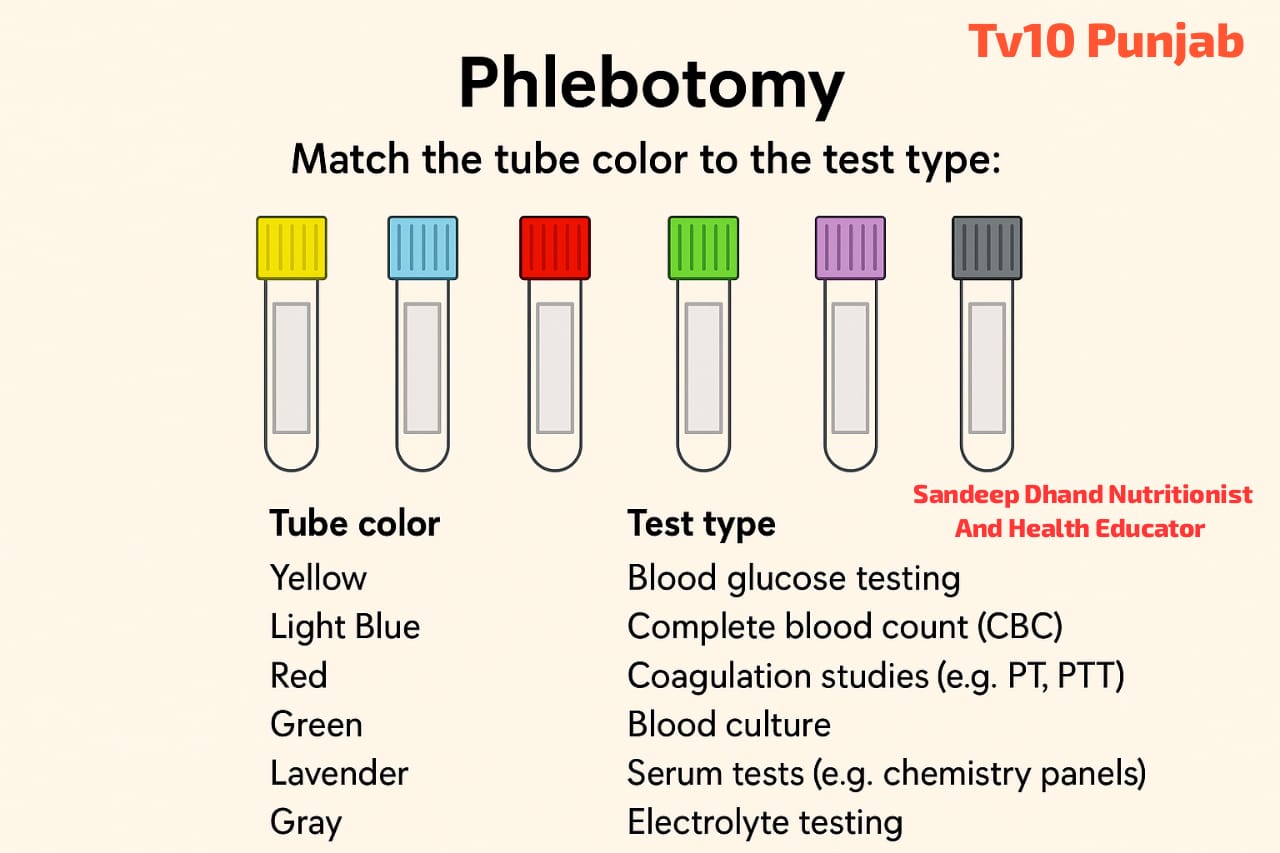
In this article, we will understand the tube colors shown in the activity sheet and the exact test types written for each tube. The goal is to match the tube cap color with the correct medical test as provided in the information.
- Yellow Tube – Blood Glucose Testing
According to the information provided, the yellow-colored tube is used for blood glucose testing. Blood glucose testing helps measure the amount of sugar present in the blood. This test is important for diagnosing and monitoring diabetes. Although different laboratories may use different tubes in real practice, here the given chart clearly mentions that yellow tubes are matched with glucose testing.
Glucose testing is often done to check whether blood sugar levels are normal, high, or low. High levels may indicate diabetes, while low levels may show hypoglycemia. This simple test helps doctors understand how well the body is handling glucose, especially after food intake or during fasting.
- Light Blue Tube – Complete Blood Count (CBC)
The image states that the light blue tube is used for a Complete Blood Count (CBC). CBC is one of the most commonly performed blood tests. It checks different components of blood, such as red blood cells, white blood cells, hemoglobin, hematocrit, and platelets.
This test helps detect anemia, infections, and many other blood-related conditions. Matching the tube correctly is very important because the wrong tube may affect the accuracy of the results. In this given chart, the light blue tube is assigned only for CBC testing.
- Red Tube – Coagulation Studies (PT, PTT)
The red tube, as per the given material, is used for coagulation studies, such as PT (Prothrombin Time) and PTT (Partial Thromboplastin Time). These tests help determine how quickly a person’s blood clots. If clotting is too slow, it may indicate bleeding disorders. If clotting is too fast, it may indicate risk of blood clots.
Coagulation studies are extremely important for patients on blood-thinning medications or those who are going for surgery. Therefore, the red tube must be used correctly as mentioned. In this activity, the red tube has been clearly matched with coagulation tests only.
- Green Tube – Blood Culture
The green tube in the chart is assigned for blood culture. A blood culture test helps identify infections in the bloodstream. It looks for bacteria or fungi that may be causing bloodstream infections. These infections can be serious and require immediate treatment.
Using the correct tube is very important because the tube may contain materials that help in detecting microorganisms. In this chart, the green tube is clearly labeled for blood culture testing only.
- Lavender Tube – Serum Tests (Chemistry Panels)
The lavender-colored tube is matched with serum tests, including chemistry panels. Chemistry panels are a group of tests that measure different chemicals and substances in the blood. These may include liver enzymes, kidney function markers, protein levels, and other essential components.
Serum tests help doctors understand the overall health of the body and detect problems in different organs. Lavender tubes are used here for collecting samples that will be used for these serum-based tests according to the information provided.
- Gray Tube – Electrolyte Testing
The gray tube is listed for electrolyte testing. Electrolytes include important minerals like sodium, potassium, chloride, and bicarbonate. These minerals help maintain balance in the body, keep muscles working properly, and support nerves and heart function.
Electrolyte imbalance can cause serious health issues such as weakness, irregular heartbeat, dehydration, or nerve problems. The gray tube is used for the tests that measure these electrolyte levels, as clearly mentioned in this educational material.
Summary of Tube Colors with Test Types
Below is a clear summary based only on the information provided in the image:
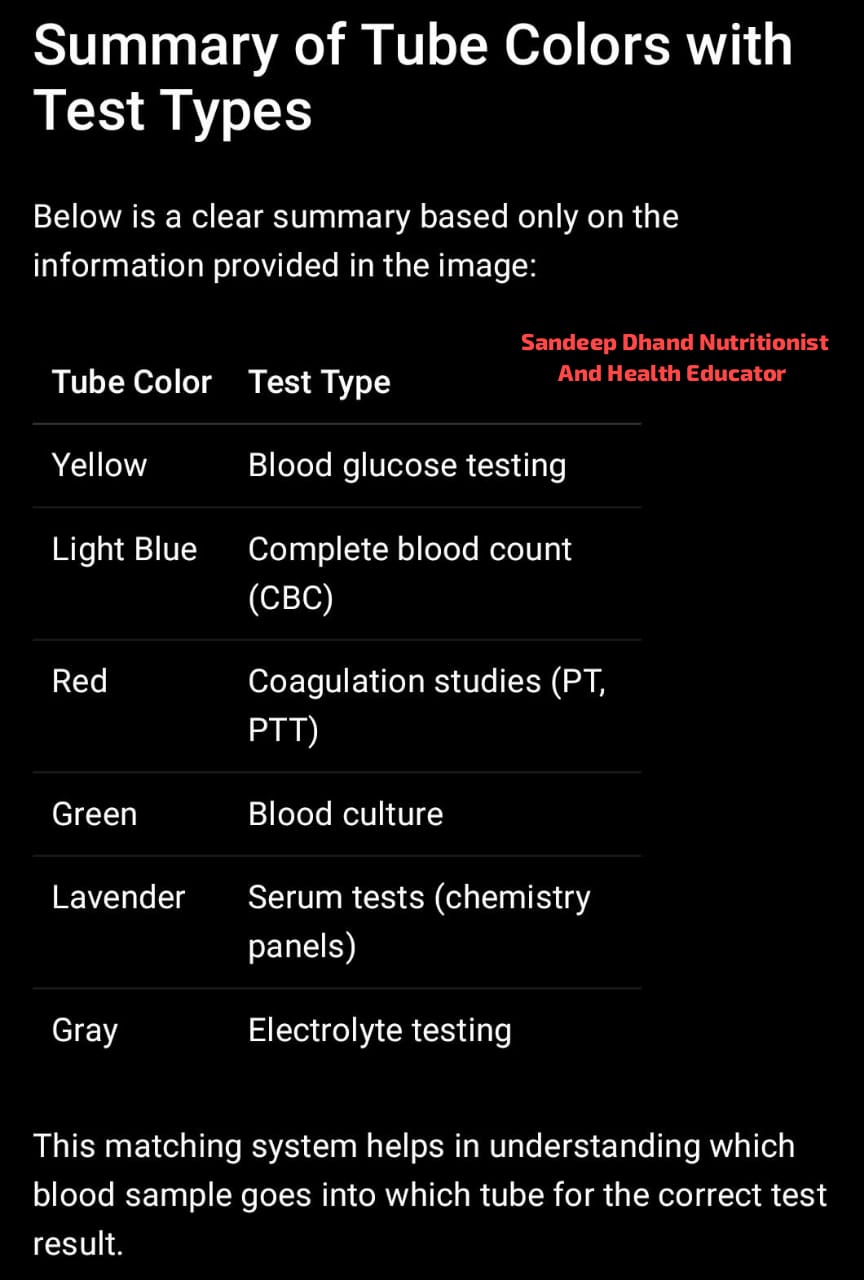
This matching system helps in understanding which blood sample goes into which tube for the correct test result.
Why Matching Tube Color to Test Type Matters
Correct tube selection is crucial because:
- Each tube may contain specific additives
Some tubes help preserve blood.
Some help blood clot.
Some prevent clotting.
Some help detect microorganisms.
If the wrong tube is used, the test may not work correctly.
- Accuracy of test results depends on proper tube usage
Even a small mistake in tube selection can change the test outcome. This can lead to incorrect diagnosis or treatment.
- Helps maintain standard procedure
Using the correct color-coded tube helps medical professionals follow proper lab guidelines. Phlebotomy training often includes learning these tube colors so that blood samples are always collected correctly.
Phlebotomy Education Through Color Coding
The activity sheet shown in the image is a simple and clear way to help learners remember the tube colors and the type of test associated with each one. This kind of matching exercise is useful for:
Students learning phlebotomy
Nursing trainees
Laboratory technician students
Medical assistants
Anyone working in healthcare
Learning with colors makes the information easier to remember and apply in real situations.
Conclusion
Understanding phlebotomy tube colors and their specific test types is an important part of medical training. The chart provided makes it easy to match each tube color with its corresponding test type. Yellow is for glucose testing, light blue for CBC, red for coagulation studies, green for blood culture, lavender for serum tests, and gray for electrolyte testing. These matches help ensure accurate test results, proper diagnosis, and good patient care.