Health Desk ( Tv10 Punjab )
Sandeep Dhand
Nutritionist And Health Educator
Introduction : Food is meant to give pleasure, energy, and nourishment. For most people, the smell of freshly cooked food increases hunger. But strangely, many people who cook food every day—especially home cooks, chefs, caterers, or caregivers—often experience the opposite. They cook meals, taste ingredients, smell spices, and spend hours in the kitchen, yet when it is time to eat, they feel no hunger at all.
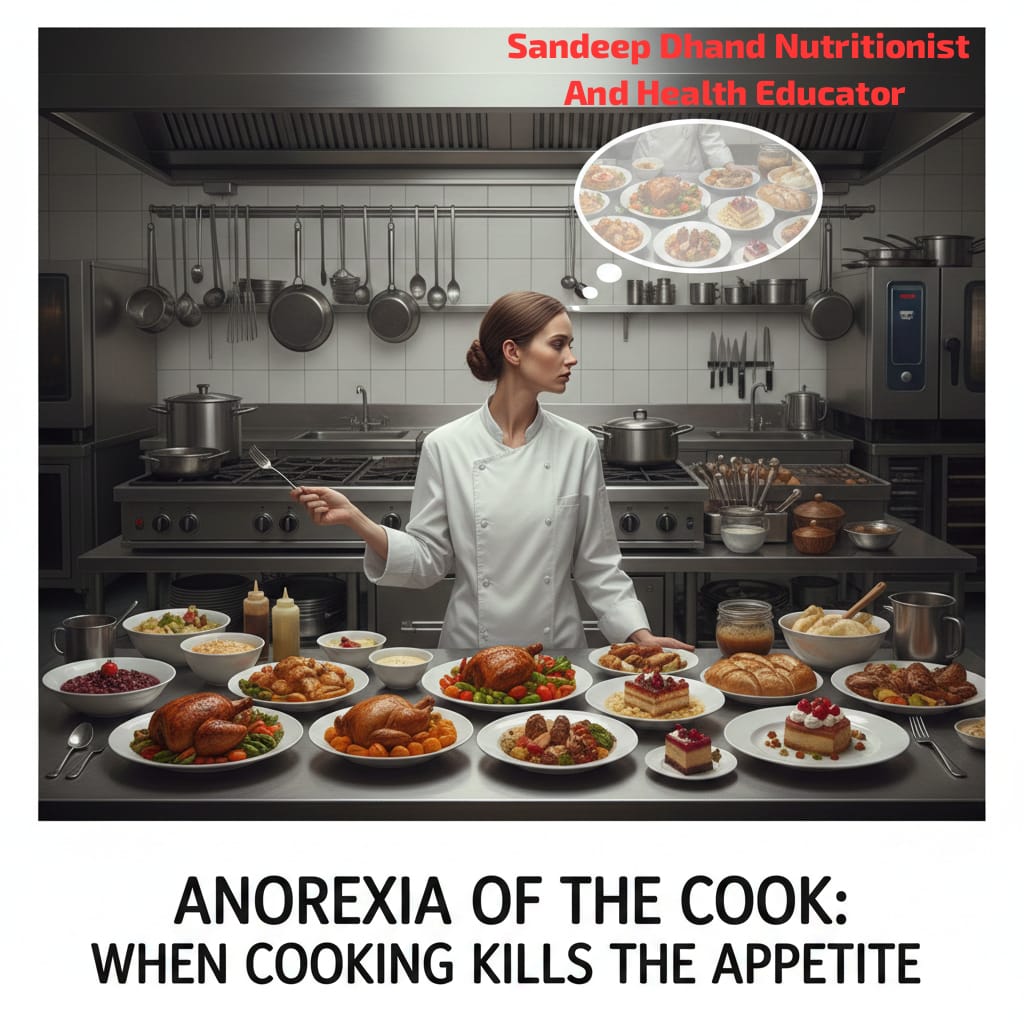
This condition is commonly known as “Anorexia of the Cook.” It is not an official medical disease name, but it describes a very real and common problem: loss of appetite in people who cook regularly. In medical terms, it falls under Anorexia (loss of appetite), not Anorexia Nervosa, which is a serious eating disorder.
This article explains Anorexia of the Cook in simple language—what it is, why it happens, its symptoms, health effects, and practical ways to manage and prevent it.
What Is Anorexia of the Cook?
Anorexia of the Cook refers to a condition where a person who prepares food regularly does not feel hungry after cooking. Even though the food may be tasty and nutritious, the cook feels full, tired, or mentally exhausted and skips meals or eats very little.
It is seen commonly in:
Home makers
Professional chefs
Restaurant workers
People cooking for large families
Caregivers cooking for patients or elderly people
This condition is usually functional and temporary, but if ignored for a long time, it can affect health seriously.
Medical Meaning of Anorexia
In medicine, the word Anorexia simply means:
Loss of appetite or reduced desire to eat
It does not always mean a mental illness.
Important Difference
Anorexia (Loss of appetite) → A symptom
Anorexia Nervosa → A psychiatric eating disorder
Anorexia of the Cook belongs to the first category.
Why Does Anorexia of the Cook Happen?
There is no single cause. It usually happens due to a combination of physical, sensory, and mental factors.
- Continuous Exposure to Food Smell
While cooking, the body is exposed to:
Food smells
Heat
Steam
Visual stimulation
This constant exposure tricks the brain into feeling full.
The brain receives signals like:
“Food is already consumed”
“Enough sensory satisfaction”
As a result, hunger hormones reduce even before eating.
- Sensory Overload
Cooking involves all senses:
Smell
Sight
Taste (while checking salt/spices)
Touch
After hours of stimulation, the senses become fatigued, leading to:
Loss of interest in food
Mental fullness
This is called Sensory Appetite Fatigue. - Mental and Emotional Fatigue
Cooking is not just physical work. It also involves:
Planning meals
Managing time
Thinking about nutrition
Serving others
By the time food is ready, the cook feels:
Mentally drained
Emotionally tired
Irritated or stressed
Stress directly suppresses appetite. - Stress and Responsibility
Many cooks feel pressure:
“Everyone must like the food”
“Food should be perfect”
“I must cook on time”
Stress increases cortisol, a hormone that reduces hunger in many people. - Irregular Eating Routine
Cooks often:
Skip breakfast
Delay meals
Eat at odd times
This confuses hunger signals and slowly reduces appetite. - Heat and Dehydration
Kitchen heat causes:
Excess sweating
Mild dehydration
Dehydration often feels like:
Loss of appetite
Nausea
Weakness
People confuse thirst with fullness. - Hormonal Factors
Stress and fatigue affect hormones like:
Ghrelin (hunger hormone)
Leptin (satiety hormone)
Imbalance leads to reduced hunger.
Common Symptoms of Anorexia of the Cook
Symptoms may be mild at first but increase over time.
Physical Symptoms
No hunger after cooking
Feeling full without eating
Weight loss
Weakness
Dizziness
Low energy
Mental Symptoms
Food aversion
Irritation at meal time
Disinterest in eating
Emotional exhaustion
Eating Behavior Changes
Skipping meals
Eating very small portions
Eating only once a day
Is Anorexia of the Cook Dangerous?
Short-Term
Usually not dangerous
Common and reversible
Long-Term (If Ignored)
Nutrient deficiencies
Weight loss
Weak immunity
Hormonal imbalance
Digestive problems
If appetite loss lasts more than 2–3 weeks, medical advice is needed.
Who Is at Higher Risk?
Housewives cooking daily
Professional chefs
Catering workers
Single parents
Caregivers
People with anxiety or stress
People with long working hours
Psychological Aspect
Many cooks prioritize others:
“Everyone else must eat well”
“I will eat later”
This habit slowly disconnects them from their own hunger signals.
Emotional neglect of self plays a big role.
Difference Between Anorexia of the Cook and Eating Disorders
Feature
Anorexia of the Cook
Anorexia Nervosa
Cause
Fatigue, stress, smell
Fear of weight gain
Intentional weight loss
No
Yes
Body image issues
No
Yes
Treatment
Lifestyle changes
Medical + psychological care
How Is It Diagnosed?
There is no special test.
Doctors may:
Take diet history
Check weight changes
Rule out anemia, thyroid issues, infections
Diagnosis is mainly clinical.
Management and Treatment
- Take a Break Before Eating After cooking:
Sit quietly for 10–15 minutes
Wash face
Change clothes
This resets hunger signals. - Eat Small Portions First
Do not force full meals. Start with:
Soup
Fruit
Yogurt
Smoothie
Once appetite returns, eat normally. - Stay Hydrated
Drink water during cooking. Add:
Lemon water
Coconut water
Avoid dehydration. - Change the Eating Environment
Eat in a different room. Avoid eating in the kitchen. - Rotate Cooking Duties
If possible:
Share cooking work
Take weekly breaks - Focus on Self-Care
Sleep well
Reduce stress
Practice relaxation
Mental rest improves appetite. - Include Appetite-Stimulating Foods
Ginger
Lemon
Mint
Spices in moderation - Maintain Regular Meal Timings
Train your body clock. Eat at fixed times daily.
Role of Nutrition
Even with low appetite:
Ensure protein intake
Include healthy fats
Take multivitamins if needed
Skipping meals regularly should be avoided.
When to See a Doctor
Consult a doctor if:
Appetite loss lasts more than 3 weeks
Sudden weight loss occurs
Weakness is severe
Dizziness or fainting happens
Prevention Tips
Respect your hunger
Eat before extreme fatigue
Avoid overworking in the kitchen
Take care of mental health
Myths About Anorexia of the Cook
Myth 1: “It means food is bad”
❌ False
It is sensory fatigue, not food quality.
Myth 2: “It is laziness”
❌ False
It is a physiological response.
Myth 3: “It is always mental illness”
❌ False
Most cases are non-psychiatric.
Anorexia of the Cook in Professional Chefs
Professional chefs face:
Long hours
Heat
Stress
Repetitive tasting
Many survive on coffee instead of meals, leading to long-term health problems.
Simple Daily Routine to Improve Appetite
Morning:
Light breakfast
During Cooking:
Sip water
After Cooking:
Short rest
Meal Time:
Eat slowly
Small portions
Night:
Proper dinner
Conclusion : Anorexia of the Cook is a common, real, and often ignored condition. It happens not because the food is bad, but because the body and mind are exhausted by continuous exposure to cooking, stress, and responsibility.
The good news is that it is manageable and reversible with simple lifestyle changes. Recognizing the problem early, respecting one’s own hunger, and practicing self-care are the keys to recovery. A cook feeds everyone—but must not forget to feed themselves.