Health Desk
Tv10punjab
Sandeep Dhand
Nutritionist And Health Educator
Introduction
Childhood and adolescence are two of the most important stages of human life. These stages lay the foundation for health, habits, personality, emotional strength, intelligence, and overall success in adulthood. Childhood is the time of rapid growth, learning, curiosity, and emotional shaping. Adolescence, on the other hand, is a period of major transformation where a child begins to move toward adulthood—physically, mentally, socially, and emotionally.
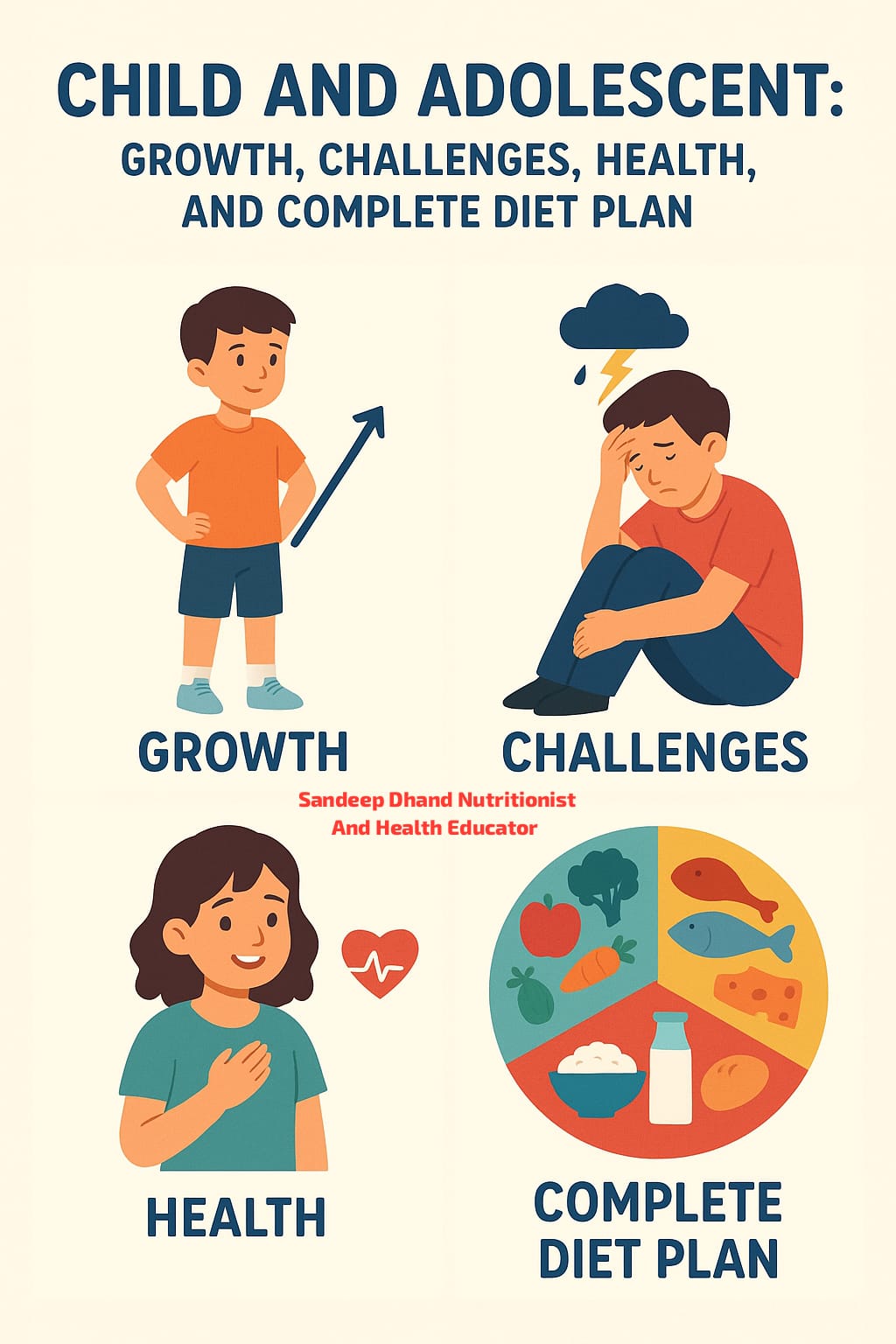
A strong beginning in childhood and a well-guided adolescence help a person grow into a confident, healthy, emotionally stable, and responsible adult. This article explains both stages in simple language, covering their characteristics, development, challenges, and a complete diet plan.
UNDERSTANDING CHILDHOOD
What is Childhood?
Childhood is the period from birth to 12 years of age. These years include three main stages:
- Early Childhood (0–5 years)
- Middle Childhood (6–9 years)
- Late Childhood (10–12 years)
Each stage has different needs, growth rates, emotions, and learning patterns.
Characteristics of Childhood
- Rapid Physical Growth
Children grow faster during the first five years than at any other time. Height, weight, brain development, immunity, and organ functioning improve quickly.
- High Curiosity
A child always wants to know “why” and “how.” Curiosity helps them explore the world.
- Emotional Sensitivity
Children observe family behavior deeply. They learn emotions through parents and caregivers.
- Development of Language and Thinking
Speech, vocabulary, and problem-solving skills develop rapidly.
- Dependency on Adults
Children rely on adults for food, protection, emotional support, and learning.
PHYSICAL DEVELOPMENT IN CHILDREN
Growth in Height and Weight
Growth occurs at different speeds depending on:
Genetics
Nutrition
Health
Physical activity
Emotional well-being
Proper nutrition during childhood determines long-term health, immunity, and brain power.
Brain Development
Almost 90% of brain development happens before age 5. This includes:
Memory
Learning
Imagination
Emotional control
Decision-making
Early childhood stimulation boosts intelligence.
Motor Skills Development
Fine Motor Skills
Holding a pencil
Buttoning clothes
Drawing
Picking up small objects
Gross Motor Skills
Walking
Running
Jumping
Climbing
Both are important for independence and confidence.
EMOTIONAL AND SOCIAL DEVELOPMENT
1.Emotional Development
Children learn:
Love
Fear
Anger
Sharing
Trust
Empathy
Parents play a major role in shaping emotional health.
- Social Development
Children develop:
Friendships
Manners
Cooperation
Teamwork
Respect for others
Social skills prepare them for school and future relationships.
COMMON CHALLENGES IN CHILDHOOD
- Nutritional Deficiencies
Many children suffer from:
Iron deficiency
Vitamin D deficiency
Low immunity
Poor appetite
- Behavioral Issues
Caused by:
Excess screen time
Lack of routine
Poor sleep
Stress at home
- Learning Difficulties
Some children may struggle in:
Reading
Writing
Concentration
- Obesity or Underweight
Both are harmful and require proper diet and lifestyle management.
WHAT IS ADOLESCENCE?
Understanding Adolescence
Adolescence is the stage from 13 to 19 years, where a child transitions into adulthood. Hormones, emotions, physical strength, thinking, and decision-making all change rapidly.
It includes:
Early adolescence (13–15 years)
Middle adolescence (15–17 years)
Late adolescence (17–19 years)
PHYSICAL CHANGES IN ADOLESCENTS
- Puberty
Puberty brings major changes due to hormones.
Boys:
Voice deepens
Facial and body hair grows
Muscles increase
Height increases rapidly
Girls:
Menstruation begins
Breasts develop
Hips widen
Emotional changes occur
- Growth Spurt
Both boys and girls experience sudden increases in height and weight.
MENTAL AND EMOTIONAL DEVELOPMENT
- Identity Formation
Teenagers try to understand who they are and what they want in life.
- Emotional Fluctuations
Mood swings occur due to hormonal changes.
- Independence
Adolescents want privacy and personal freedom.
- Peer Influence
Friends often influence behavior, choices, and habits.
COMMON ADOLESCENT CHALLENGES
- Stress and Anxiety
Caused by school pressure, family expectations, or body changes.
- Low Self-Esteem
Due to appearance, comparison, or bullying.
- Mobile and Social Media Addiction
Leads to distraction and emotional problems.
- Nutritional Deficiencies
Especially among girls:
Iron deficiency
Calcium deficiency
Vitamin B12 deficiency
ROLE OF FAMILY, SCHOOL & SOCIETY
Family Role
Provide emotional support
Teach manners and values
Encourage healthy diet
Monitor behavior without controlling
School Role
Promote learning
Build discipline
Support talent
Society Role
Provide a safe environment
Offer good role models
IMPORTANCE OF NUTRITION FOR CHILDREN AND ADOLESCENTS
Nutrition affects:
Height and weight
Brain function
Immunity
Hormonal balance
Emotional health
Concentration and memory
Balanced nutrition is essential for overall growth.
COMPLETE DIET PLAN FOR CHILDREN (5–12 YEARS)
- Morning (Empty Stomach)
Warm water
1 fruit (apple/banana/orange)
- Breakfast
Milk or curd
Whole grains (dal chilla, oats, poha, upma, eggs etc.)
Nuts (2 almonds + 1 walnut)
- Mid-morning Snack
Fruits
Coconut water
Boiled chana
- Lunch
Roti/Chapati
Dal or beans
Green vegetables
Rice (small portion)
Salad
- Evening Snack
Milk
Roasted makhana
Fruit or sandwich
- Dinner
Roti with vegetables
Paneer or dal
Soup (optional)
COMPLETE DIET PLAN FOR ADOLESCENTS (13–19 YEARS)
- Morning (Empty Stomach)
1 glass warm water
1 seasonal fruit
- Breakfast
Eggs / milk / curd
Paratha + curd
Sprouts
Oats with nuts
- Mid-Morning
Fruit
Lemon water
Peanut chikki
- Lunch
2–3 chapati
Dal + vegetable
Curd
Salad
- Evening Snack
Peanut salad
Fruit smoothie
Roasted chana/makhana
- Dinner
Dal/Paneer
Vegetables
Soup
1–2 roti
- Before Bed
Warm milk (optional for teens)
TIPS FOR HEALTHY DEVELOPMENT
- Reduce Screen Time
Maximum 1–2 hours/day.
- Encourage Outdoor Games
Boosts growth hormones.
- Maintain Sleep Routine
Children need 9–11 hours.
Adolescents need 8–9 hours.
- Emotional Support
Children and teens must feel heard and understood.
- Healthy Communication
Discuss problems openly.
CONCLUSION
Childhood and adolescence are powerful stages that shape the entire future of a person. Providing proper nutrition, emotional support, education, and a healthy environment helps children grow into intelligent, confident, and strong adults. A balanced diet, positive parenting, regular physical activity, and mental support are the pillars of a healthy childhood and adolescence.
When children grow with love, guidance, and good health habits, they become future-ready individuals who contribute positively to society.