Health Desk
Tv10 Punjab
2 January
Sandeep Dhand
Nutritionist And Health Educator
The Central Government of India has imposed an immediate ban on oral formulations of nimesulide containing more than 100 mg, citing potential health risks and the availability of safer alternatives. The decision has been taken under the Drugs and Cosmetics Act, 1940, and will be implemented across the country with immediate effect.
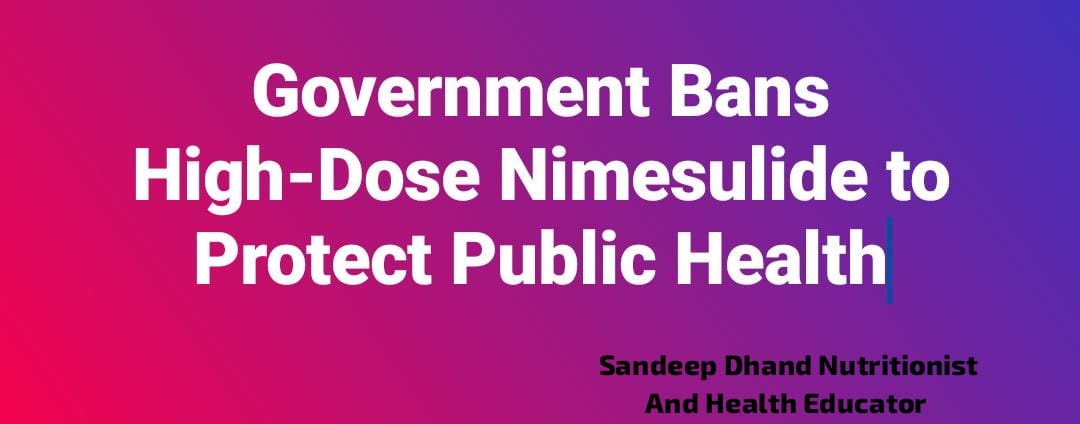
Nimesulide is a commonly used non-steroidal anti-inflammatory drug (NSAID) prescribed for pain, fever, and inflammation. Over the years, however, concerns have been raised about its safety, especially its link to liver toxicity. Keeping public health as the top priority, the government has now prohibited the manufacture, sale, and distribution of high-dose oral nimesulide formulations nationwide.
The ban has been issued under Section 26A of the Drugs and Cosmetics Act, which gives the Central Government the authority to restrict or ban drugs that pose a risk to patients. Before taking this decision, the government consulted the Drugs Technical Advisory Board (DTAB), the country’s highest technical advisory body on matters related to drugs and cosmetics.
Nimesulide has long been under regulatory and medical scrutiny due to reports of liver damage associated with its use. The World Health Organization (WHO) has not included nimesulide in its Model List of Essential Medicines, reflecting global caution regarding its safety profile. In several countries, regulatory authorities have either banned the drug or withdrawn it from the market because of liver-related safety concerns highlighted in WHO pharmacovigilance reports.
In India, the Central Drugs Standard Control Organisation (CDSCO) has repeatedly reviewed the risk-benefit profile of nimesulide. Medical experts have pointed out that safer and well-established alternatives such as paracetamol and ibuprofen are widely available. These alternatives have a better safety record, supported by scientific evidence and recommendations from institutions like the Indian Council of Medical Research (ICMR).
Earlier this year, the ICMR also raised serious safety concerns regarding the use of nimesulide. It recommended restricting the drug’s use in patients below 18 years and above 60 years of age. The council further advised banning oral formulations containing more than 100 mg of nimesulide, which has now been implemented by the government.
In India, nimesulide is sold under several popular brand names such as Nimulid, Nimtex, Nicip, and Nise, with Nise being one of the highest-selling brands. The latest order clearly states that the ban comes into force immediately and will be uniformly enforced in all states and Union Territories to avoid any regulatory gaps.
The prohibition of high-dose nimesulide oral formulations marks a significant step toward strengthening drug safety regulations in India. It reflects the government’s commitment to safeguarding public health and encouraging the use of safer, evidence-based medicines for pain and fever management.