National / Punjab Desk
13 April
Sandeep Dhand Ludhiana
Journalist And Research Analysist
The Jallianwala Bagh massacre is one of the most tragic and painful events in the history of India. It took place on 13 April 1919 in the city of Amritsar, Punjab. This incident left a deep impact on the minds of Indians and played a major role in strengthening the freedom movement against British rule.
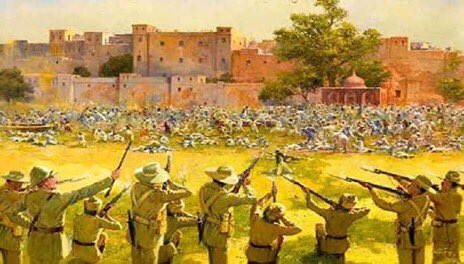
On that day, thousands of people had gathered at Jallianwala Bagh, a public garden surrounded by walls with very few narrow exits. It was the festival of Baisakhi, which is an important occasion for Punjabis. Many people had come to celebrate the festival, while others had gathered peacefully to protest against the unjust laws imposed by the British government.
One of the main reasons behind the protest was the Rowlatt Act. This law allowed the British authorities to arrest any person without trial and keep them in jail without giving a reason. Indians saw this as a violation of their basic rights and freedom. As a result, protests were being held in different parts of the country.
During the gathering at Jallianwala Bagh, a British officer named General Reginald Dyer entered the garden with his soldiers. Without giving any warning or asking the crowd to disperse, he ordered his troops to open fire on the unarmed people. The soldiers fired continuously for about 10 minutes.
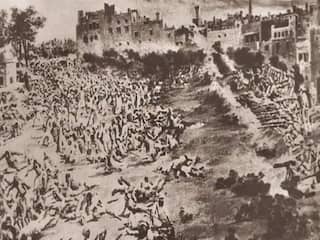
The situation inside the garden became horrifying. Since the exits were very narrow and limited, people could not escape easily. Panic spread everywhere. Many people were shot while trying to run, while others fell on the ground. Some people even jumped into a well inside the garden to save themselves from the bullets, but lost their lives.
According to official British records, about 379 people were killed and more than 1,000 were injured. However, Indian sources believe that the actual number of deaths was much higher. The ground of Jallianwala Bagh was covered with blood, and the cries of innocent people filled the air. It was a scene of complete chaos and tragedy.
This brutal act shocked the entire nation. People across India were filled with anger and sorrow. The massacre exposed the cruel nature of British rule. It became clear that the British government was ready to use extreme violence to control the Indian population.
After this incident, many Indian leaders strongly opposed British policies. The Jallianwala Bagh massacre also changed the thinking of many Indians. People who earlier believed in peaceful cooperation with the British started demanding complete independence. It united people from different regions, religions, and backgrounds in the fight for freedom.
The British government later set up an inquiry known as the Hunter Commission to investigate the incident. Although General Dyer was criticized for his actions, he was not severely punished. This further angered Indians, as they felt justice was not done.
Today, Jallianwala Bagh stands as a memorial to honor the innocent people who lost their lives. Visitors can still see the bullet marks on the walls and the well where many people jumped. It reminds us of the sacrifices made by our ancestors for the freedom we enjoy today.
In conclusion, the Jallianwala Bagh massacre was not just a tragic event, but a turning point in India’s struggle for independence. It awakened the spirit of nationalism and strengthened the resolve of the people to fight against injustice. The bravery and sacrifice of those who died on that day will always be remembered in history.