Health Desk
Sandeep Dhand
Nutritionist And Health Educator
Scrub Typhus is a serious bacterial disease that affects many people in tropical and rural areas, especially in countries like India. It spreads through the bite of infected mites and can cause fever, weakness, and many other health problems. In recent times, there has been concern in Andhra Pradesh and other parts of India due to rising cases of this infection.
What is Scrub Typhus?
Scrub Typhus is an infectious disease caused by a bacterium called Orientia tsutsugamushi. It is not a virus, although many people confuse it with one. It belongs to a group of diseases known as “rickettsial infections.”

This infection spreads to humans through the bite of tiny infected insects called chigger mites (larval mites). These mites are usually found in grassy fields, forests, and rural areas where there is a lot of vegetation or bushes.
When a mite carrying the bacteria bites a person, the bacteria enter the bloodstream and start multiplying, leading to infection and symptoms.
Where Does Scrub Typhus Occur?
Scrub Typhus is common in a region known as the “Tsutsugamushi Triangle,” which includes parts of:
South and Southeast Asia
Northern Australia
Pacific Islands
Japan and Korea
India and Nepal
In India, it is especially found in states such as:
Andhra Pradesh
Tamil Nadu
Kerala
Assam
Himachal Pradesh
Uttarakhand
It usually appears during or after the monsoon season, when the environment is humid and suitable for mites to grow.
How Scrub Typhus Spreads
Scrub Typhus spreads through the bite of infected chiggers (larval mites). These mites live on the bodies of rodents like rats and squirrels, and they get infected when they bite an infected animal. Later, when the same mite bites a human, it passes the bacteria into the skin.
Important Points About Transmission:
It does not spread from person to person.
The infection happens mainly in forested, agricultural, or grassy areas.
Farmers, forest workers, and people living in rural areas are at higher risk.
Mite bites usually occur on the legs, groin, waist, or underarms — places where the skin is thin or where clothing is tight.
What Happens in the Body
Once the bacteria enter the bloodstream, they infect the cells that line the blood vessels. This leads to inflammation and damage in small blood vessels all over the body.
As a result, the infection affects many organs such as the:
Liver
Lungs
Kidneys
Heart
Brain
If not treated early, the disease can cause serious complications like organ failure or even death.
Symptoms of Scrub Typhus
Symptoms usually appear 6 to 21 days after the bite. The early signs are similar to those of other fevers, which can make diagnosis difficult.
Common Symptoms:
- High Fever (often above 102°F)
- Headache
- Chills and sweating
- Body and muscle pain
- Fatigue and weakness
- Rashes on the skin (especially on the chest and back)
- Nausea or vomiting
- Swollen lymph nodes
Characteristic Sign – Eschar:
One unique symptom of scrub typhus is the formation of an eschar — a black scab or sore at the site of the mite bite.
It looks like a small dark wound with a red ring around it. The eschar is painless but is a key clue for doctors to diagnose the disease.
Severe Symptoms (If Untreated):
Breathing problems
Confusion or drowsiness
Cough with sputum
Low blood pressure
Jaundice (yellowing of eyes and skin)
Multi-organ failure
How Scrub Typhus is Diagnosed
Because its symptoms are similar to diseases like dengue, malaria, or typhoid, doctors use blood tests to confirm scrub typhus.
Diagnostic Tests Include:
- Weil-Felix Test – An older test that gives a basic indication.
- ELISA Test (IgM/IgG) – Detects specific antibodies against the bacteria.
- PCR (Polymerase Chain Reaction) – Detects bacterial DNA in blood samples; very accurate.
- Liver and kidney function tests – To check for organ involvement.
Doctors may also check for the eschar and other clinical signs before confirming the diagnosis.
Treatment of Scrub Typhus
Scrub Typhus can be effectively treated with antibiotics if diagnosed early.
Antibiotics Commonly Used:
- Doxycycline – Most effective and widely used antibiotic.
- Azithromycin – Used for pregnant women and people allergic to doxycycline.
- Chloramphenicol – Used in severe cases when other antibiotics don’t work.
Usually, patients begin to feel better within 48 hours of starting antibiotics.
Supportive Treatments:
Paracetamol for fever and pain.
IV fluids to prevent dehydration.
Oxygen therapy if breathing problems occur.
Intensive care for severe cases with organ failure.
Complications of Scrub Typhus
If not treated on time, Scrub Typhus can become very dangerous.
Possible Complications Include:
Meningitis (infection of the brain covering)
Pneumonia (lung infection)
Liver and kidney failure
Heart inflammation (myocarditis)
Shock and multi-organ failure
Mortality (death rate) can range from 6% to 30% if untreated, but it drops drastically with early antibiotic treatment.
Prevention of Scrub Typhus
Prevention is the best protection, especially for people living or working in rural and forested regions.
Preventive Steps:
A. Personal Protection
- Wear full-sleeve shirts and long pants when going outdoors.
- Use insect repellents containing DEET or permethrin on clothes and skin.
- Tuck pants into socks to avoid mite bites.
- Avoid sitting or sleeping directly on grass or soil.
- Take a shower after coming indoors from rural or forested areas.
B. Environmental Control
- Keep surroundings clean and free from dense grass or bushes.
- Maintain cleanliness in farms and gardens.
- Control rodent populations, as they carry infected mites.
C. Health Awareness
- Educate rural and agricultural workers about the risks of mite bites.
- Report fever cases early to healthcare providers.
- There is no vaccine yet, so preventive care is crucial.
Diet and Nutrition for Scrub Typhus Recovery
Nutrition plays a major role in recovery after any infection, including scrub typhus. The body becomes weak, dehydrated, and loses energy due to high fever and inflammation.
Here’s a simple diet plan to help with recovery:
A. During Fever (Acute Phase):
When fever is high, digestion becomes weak.
Drink plenty of fluids — water, coconut water, soups, and fresh fruit juices.
Eat soft, easily digestible foods like khichdi, boiled rice, and moong dal.
Avoid spicy and oily foods.
Include ORS (Oral Rehydration Solution) to maintain electrolytes.
B. Recovery Phase (After Fever Reduces):
Once fever subsides, focus on rebuilding strength and immunity.
- Protein-Rich Foods:
Helps repair body tissues damaged by infection.
Boiled eggs (if non-vegetarian)
Pulses, lentils, paneer, and tofu
Milk and curd
- Vitamin-Rich Foods:
Boosts immune system.
Fruits: Papaya, oranges, guava, apple
Vegetables: Carrots, spinach, bottle gourd
- Iron and Zinc Sources:
Improve blood health and healing.
Jaggery, dates, nuts, seeds, and legumes
- Fluids and Hydration:
Water, soups, buttermilk, coconut water
Avoid caffeinated or carbonated drinks
- Foods to Avoid:
Oily, junk, and processed food
Alcohol and smoking
Very spicy or heavy food
Home Remedies and Care Tips
While medical treatment is essential, home remedies can support recovery.
- Rest properly: The body needs time to heal.
- Hydrate continuously: Dehydration can worsen fever symptoms.
- Use a cool compress: To reduce fever and headache.
- Eat small meals frequently: Helps maintain energy without straining digestion.
- Monitor symptoms daily: Seek medical attention if fever persists or breathing becomes difficult.
Scrub Typhus in India – Recent Concerns
In recent months, several districts in Andhra Pradesh and other parts of India have reported increasing cases of scrub typhus. Health authorities have warned people to take precautions, especially during monsoon and post-monsoon seasons.
Outbreaks are usually linked to:
Poor sanitation
Increased vegetation after rains
Close contact with fields or grasslands
Hospitals have been instructed to test for scrub typhus in patients showing fever that does not respond to normal treatments like those for dengue or malaria.
Who is at Risk?
People most at risk include:
Farmers and agricultural workers
Forest guards and soldiers
People who camp or hike in forests
Children playing outdoors in rural areas
Even pets or livestock can carry mites, so hygiene is very important.
Difference Between Scrub Typhus and Other Fevers
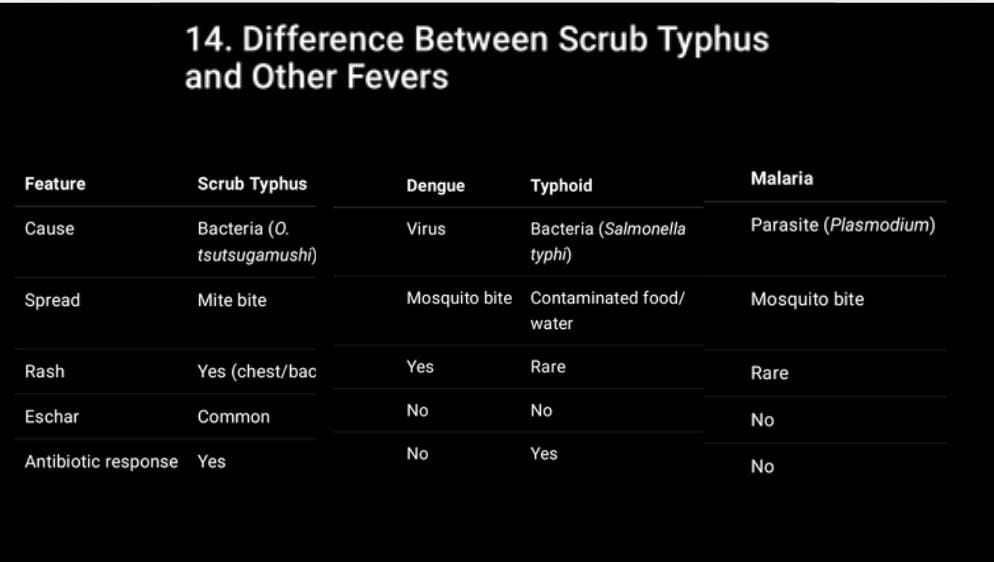
This table helps differentiate scrub typhus from other common fevers.
When to See a Doctor
See a doctor immediately if you experience:
Persistent high fever (more than 4 days)
A black scab (eschar) on the body
Breathing difficulty or cough
Drowsiness or confusion
Swelling in the legs or around eyes
Early medical treatment can save lives.
Recovery Time
Most patients recover within 1 to 2 weeks with proper antibiotics. However, full strength may take longer to return.
Mild cases: 7–10 days
Moderate to severe cases: 2–4 weeks
Severe organ involvement may require hospital stay.
Long-Term Effects
Usually, people recover fully, but in rare cases, complications like kidney or heart problems may remain for a few months. Regular follow-up with a doctor is important.
Public Health Measures
To control scrub typhus, public health authorities must:
Conduct awareness campaigns in villages.
Spray insecticides in high-risk areas.
Train health workers to identify symptoms early.
Promote use of protective clothing during farm work.
Key Facts to Remember
- Scrub Typhus is caused by a bacterium, not a virus.
- It spreads through infected mite bites, not person to person.
- Early diagnosis and antibiotics can cure it.
- Prevention through hygiene and protective clothing is vital.
- Diet and rest play an important role in recovery.
Conclusion
Scrub Typhus may sound frightening, but it is curable and preventable if handled properly. Awareness is the key. By keeping the surroundings clean, wearing protective clothing, and seeking early medical help for unexplained fever, we can easily avoid the risk of this infection.
A balanced diet, hydration, and timely medication are the best tools for complete recovery. With increased public awareness and preventive measures, India can successfully control outbreaks of Scrub Typhus and protect communities from its harmful effects.