National Desk
8 March
Journalist Sandeep Dhand Ludhiana
Introduction
Sahir Ludhianvi was one of the most respected poets and lyricists in Indian cinema. His poetry touched the hearts of millions because it spoke about love, pain, society, and humanity in a very honest way. Sahir’s words were simple but powerful. He believed that poetry should speak for the common people and their struggles.
He wrote many unforgettable songs for Hindi films and became one of the greatest lyricists in the history of Indian cinema. His work influenced many writers and filmmakers. Sahir received several honours during his life, including the Filmfare Award for Best Lyricist and the Padma Shri. Even today, his poetry and songs remain popular among people of all generations.
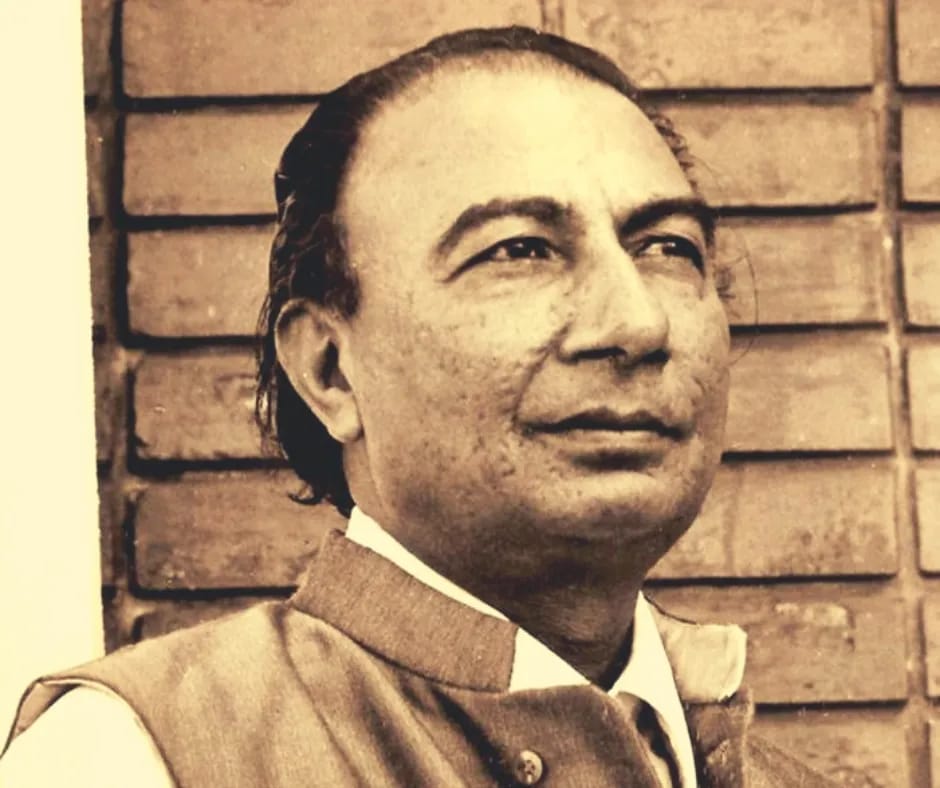
This article explores the life, education, career, and legacy of Sahir Ludhianvi in simple words.
Birth and Early Life : Sahir Ludhianvi was born on 8 March 1921 in Ludhiana, Punjab, which was then part of British India. His real name was Abdul Hayee. Later, he adopted the pen name “Sahir,” which means magician, because his poetry had the power to create magic with words.
He added “Ludhianvi” to his name because he was born in Ludhiana. This became his literary identity throughout his life.
Sahir was born into a Gujjar family. His father was a wealthy landlord, but his parents had a troubled relationship. His mother, Sardar Begum, separated from his father and raised Sahir alone. This separation created many financial and emotional difficulties for them.
Sahir loved his mother deeply. She struggled to give him a good life despite many hardships. Because of this experience, Sahir developed strong feelings about injustice and inequality, which later appeared in his poetry.
Education and Interest in Poetry : Sahir completed his early education at Khalsa High School Ludhiana. Later, he joined Government College Ludhiana for higher studies.
During his college years, Sahir became very popular among students. He wrote ghazals and nazms in Urdu and often recited them in college events. His poetry impressed many people because it carried strong emotions and powerful ideas.
However, Sahir’s growing interest in politics and literature created problems for him in college. His bold views and revolutionary thinking led to conflicts with the college authorities, and eventually he had to leave.
Even though he did not complete his formal education, Sahir continued to develop his literary talent. Poetry became the most important part of his life.
Move to Lahore and Early Writing Career : In 1943, Sahir moved to Lahore, which was an important cultural and literary centre at that time. There he began working with literary magazines and became active in the literary community.
In 1945, Sahir published his first collection of Urdu poetry called Talkhiyaan, which means Bitterness. The book became very popular and established Sahir as a serious poet.
His poetry in this book talked about social injustice, poverty, and the struggles of ordinary people. Sahir believed that poetry should not only talk about romance but also about the problems of society.
During this period, Sahir also edited several Urdu magazines such as Adab-e-Lateef and Savera. He also became a member of the Progressive Writers’ Association, a group of writers who wanted literature to bring social change.
Migration to India After Partition : After the Partition of India, political tensions increased in the region. Sahir’s progressive ideas and his support for socialist views caused problems with authorities in Pakistan.
Because of these issues, a warrant was issued for his arrest. To avoid trouble, Sahir left Lahore in 1949 and moved to Delhi.
After spending a short time in Delhi, he moved to Mumbai, which was then called Bombay. This city would later become the centre of his successful career in the film industry.
Beginning of Career in Hindi Films : Sahir began his career in the film industry with the movie Azadi Ki Raah Par. Unfortunately, the film and its songs did not become popular.
His real breakthrough came with the film Naujawan, where he worked with music composer Sachin Dev Burman. The songs became popular and people began to recognize Sahir’s talent.
Soon after, Sahir wrote lyrics for the film Baazi, directed by Guru Dutt. This film was a big success and made Sahir one of the leading lyricists in Bollywood.
Famous Films and Songs : Sahir wrote songs for many successful films. One of his most famous works was the film Pyaasa, which told the story of a struggling poet. Many people believe that the story of the film was partly inspired by Sahir’s own life.
The songs in Pyaasa became legendary and are still loved today.
Another important film was Phir Subah Hogi, based on the novel Crime and Punishment. The music for the film was composed by Khayyam. The song “Woh Subah Kabhi Toh Aayegi” became extremely famous.
Sahir also worked with many other composers such as Ravi, Roshan, and Laxmikant–Pyarelal.
One of his biggest successes came with the film Kabhie Kabhie. The title song of the film became one of the most beautiful romantic songs in Hindi cinema.
Awards and Recognition : Because of his brilliant lyrics, Sahir received many awards and honours.
He won the Filmfare Award for Best Lyricist twice. The first time was for the film Taj Mahal, and the second time was for Kabhie Kabhie.
In 1971, the Government of India honoured him with the Padma Shri, one of the country’s highest civilian awards.
Later, in 2013, the India Post issued a commemorative stamp to celebrate the 92nd birth anniversary of Sahir Ludhianvi. This showed how deeply his work was respected in India.
Personality and Beliefs : Sahir Ludhianvi was known as a strong and independent personality. He believed that lyricists should receive proper respect in the film industry.
He even insisted that music composers should compose music according to his lyrics rather than the other way around. This was unusual at that time.
Sahir also demanded that All India Radio should mention the names of lyricists when broadcasting film songs. Because of his efforts, lyricists started receiving more recognition.
He was also known for his emotional nature and his strong opinions about social justice.
Personal Life and Relationships : Sahir’s personal life was often discussed in literary circles. He was romantically connected with the famous Punjabi writer Amrita Pritam. Their love story is still remembered as one of the most emotional relationships in Indian literary history.
Later, Sahir was also linked with singer Sudha Malhotra. He supported her singing career and helped her gain recognition in the film industry.
However, Sahir never married. Many people believe that his deep emotional experiences influenced the romantic and emotional tone of his poetry.
Death and Legacy
Sahir Ludhianvi passed away on 25 October 1980 in Mumbai due to a sudden cardiac arrest. He was only 59 years old at the time of his death.
He was buried at the Juhu Muslim Cemetery.
Even after his death, Sahir’s poetry continues to inspire readers, writers, and musicians. His words remain alive through films, books, and music.
Conclusion : Sahir Ludhianvi was not just a lyricist but a poet who spoke for society. His poetry reflected love, pain, hope, and the struggles of ordinary people. Through his songs and writings, he gave a voice to emotions that many people could not express.
From a difficult childhood in Ludhiana to becoming one of the greatest lyricists of Indian cinema, Sahir’s journey is truly inspiring. His poetry proved that words can change the way people think and feel.
Today, Sahir Ludhianvi is remembered as “the people’s poet.” His songs still touch hearts, and his poetry continues to inspire generations. His legacy will always remain an important part of Indian literature and cinema.