Sandeep Dhand
Nutritionist And Health Educator
Juice therapy has become very popular in recent years. Many people believe that fresh fruit and vegetable juices can help improve health, increase energy, and even support the body in fighting diseases. The idea behind juice therapy is simple—extract nutrients from fresh foods and consume them in liquid form so the body can absorb them quickly.
This article will explain juice therapy in a simple and human-friendly way. We will explore its benefits, different types of juices for specific health problems, and important precautions—especially for people with conditions like kidney disease.
What is Juice Therapy?
Juice therapy means drinking fresh juices made from fruits, vegetables, and herbs to improve health. These juices are rich in vitamins, minerals, antioxidants, and natural enzymes.
Unlike whole foods, juices are easier to digest. This gives your digestive system some rest while still providing essential nutrients. Many people use juice therapy for detox, boosting immunity, and improving overall wellness.
Why People Choose Juice Therapy
There are many reasons why people include juices in their daily routine:
- Easy Absorption of Nutrients
Juices deliver nutrients directly into the bloodstream because they don’t require heavy digestion. - Boosts Immunity
Fresh juices contain vitamin C, antioxidants, and phytochemicals that help fight infections. - Improves Hydration
Juices, especially those made with cucumber and watermelon, help maintain body hydration. - Supports Detoxification
Certain juices help the liver and kidneys remove toxins from the body. - Improves Digestion
Juices made from fiber-rich vegetables like carrot and cabbage can improve gut health.
Types of Juice Therapy for Different Health Problems
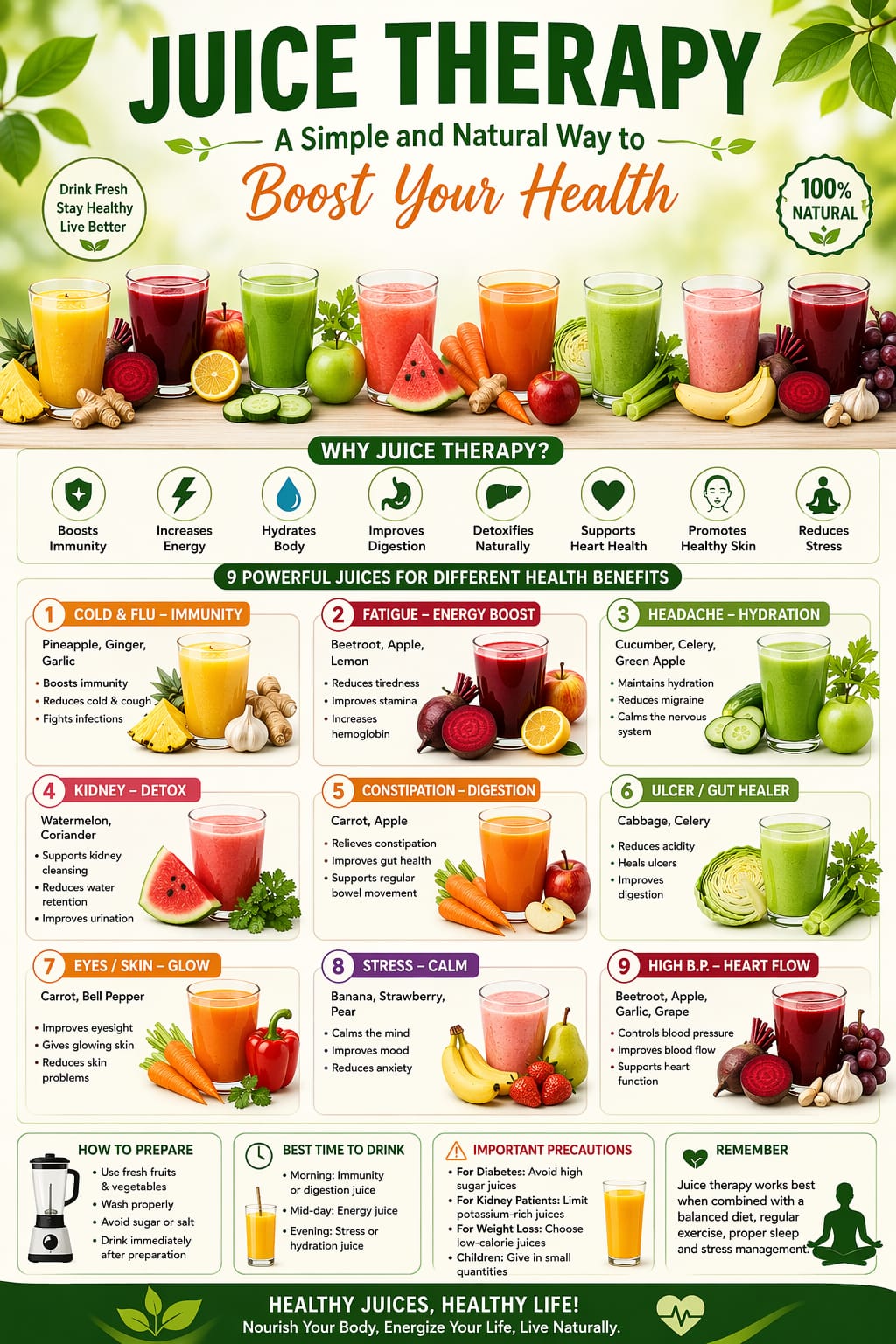
Let’s now understand the juices shown in the image and how they can help different conditions.
- Juice for Cold and Flu (Immunity Booster)
Ingredients:
Pineapple
Ginger
Garlic
Benefits: This juice is powerful for improving immunity. Pineapple is rich in vitamin C and bromelain, which helps reduce inflammation. Ginger has antibacterial properties, while garlic is known for its ability to fight infections.
How it helps:
Reduces cold and cough symptoms
Boosts immune system
Fights viral infections
Best Time to Drink:
Morning on an empty stomach
- Juice for Fatigue (Energy Boost)
Ingredients:
Beetroot
Apple
Lemon
Benefits: Beetroot improves blood circulation and increases oxygen supply in the body. Apple provides natural sugar for instant energy, and lemon detoxifies the body.
How it helps:
Reduces tiredness
Improves stamina
Increases hemoglobin levels
Best Time to Drink:
Mid-morning or before workout
- Juice for Headache (Hydration Support)
Ingredients:
Cucumber
Celery
Green Apple
Benefits: Dehydration is a common cause of headaches. This juice is rich in water and electrolytes, which helps relieve headaches naturally.
How it helps:
Maintains hydration
Reduces migraine triggers
Calms the nervous system
Best Time to Drink:
Any time during the day
- Juice for Kidney Detox
Ingredients:
Watermelon
Coriander
Benefits: Watermelon is high in water content and helps flush toxins from the body. Coriander supports kidney function.
Important Note:
For people with Chronic Kidney Disease (CKD), this juice should be taken carefully. Too much fluid or potassium can be harmful depending on your stage.
How it helps:
Supports kidney cleansing
Reduces water retention
Improves urination
Best Time to Drink:
Morning or afternoon (in limited quantity)
- Juice for Constipation (Digestion Support)
Ingredients:
Carrot
Apple
Benefits: Carrots are rich in fiber and improve bowel movement. Apples contain pectin, which supports digestion.
How it helps:
Relieves constipation
Improves gut health
Supports regular bowel movement
Best Time to Drink:
Morning before breakfast
- Juice for Ulcer and Gut Healing
Ingredients:
Cabbage
Celery
Benefits: Cabbage juice is well known for healing stomach ulcers. It contains compounds that repair the stomach lining.
How it helps:
Reduces acidity
Heals ulcers
Improves digestion
Best Time to Drink:
Empty stomach in the morning
- Juice for Skin and Eyes (Glow Booster)
Ingredients:
Carrot
Bell Pepper
Benefits: Carrots are rich in vitamin A, which improves vision and skin health. Bell peppers provide antioxidants.
How it helps:
Improves eyesight
Gives glowing skin
Reduces skin problems
Best Time to Drink:
Morning or evening
- Juice for Stress (Calming Effect)
Ingredients:
Banana
Strawberry
Pear
Benefits: This juice contains natural sugars and nutrients that help relax the mind. Banana is rich in magnesium, which reduces stress.
How it helps:
Calms the mind
Improves mood
Reduces anxiety
Best Time to Drink:
Evening or after a stressful day
- Juice for High Blood Pressure (Heart Health)
Ingredients:
Beetroot
Apple
Garlic
Grapes
Benefits: Beetroot helps lower blood pressure. Garlic improves heart health, and grapes contain antioxidants.
How it helps:
Controls blood pressure
Improves blood flow
Supports heart function
Best Time to Drink:
Morning or evening
How to Prepare Juice Properly
To get maximum benefits, follow these tips:
Always use fresh fruits and vegetables
Wash them properly before use
Avoid adding sugar or salt
Drink immediately after preparation
Use a cold-press juicer if possible
Juice Therapy vs Whole Fruits
While juice therapy is helpful, it is not a replacement for whole fruits and vegetables.
Juice:
Quick nutrient absorption
Easy to digest
Less fiber
Whole Fruits:
High fiber
Better for long-term health
Keeps you full
Best approach: Combine both in your diet.
Important Precautions
Juice therapy is beneficial, but not for everyone in the same way.
- For Diabetes Patients
Avoid fruit juices with high sugar like banana and grapes. Choose vegetable-based juices. - For Kidney Disease (CKD)
Limit potassium-rich juices like beetroot and banana
Avoid excessive fluid intake
Always consult a doctor - For Weight Loss
Avoid sweet fruit juices. Focus on low-calorie vegetable juices. - For Children
Give juices in small quantities and prefer whole fruits.
Common Mistakes in Juice Therapy
Drinking too much juice
Replacing meals with juice
Adding sugar or preservatives
Not considering medical conditions
These mistakes can reduce the benefits and even cause harm.
Is Juice Therapy a Detox?
Many people believe juice therapy can “detox” the body. In reality, your liver and kidneys already detox your body naturally.
Juices support these organs but cannot replace their function.
Daily Juice Routine (Simple Plan)
Here is a simple daily plan:
Morning: Immunity or digestion juice
Mid-day: Energy juice
Evening: Stress or hydration juice
Drink only 1–2 glasses per day for best results.
Juice Therapy for Long-Term Health
Juice therapy works best when combined with:
Balanced diet
Regular exercise
Proper sleep
Stress management
It should be a part of a healthy lifestyle, not the only solution.
Final Thoughts : Juice therapy is a simple and natural way to improve health. It provides essential nutrients, boosts immunity, and supports different body functions. From cold and flu to digestion and heart health, different juices can offer targeted benefits.
However, it is important to use juice therapy wisely. It should not replace meals or medical treatment. People with health conditions like diabetes or kidney disease should be extra careful.
If used correctly, juice therapy can be a powerful addition to your daily routine. It helps you stay energetic, hydrated, and healthy in a natural way.