International Desk
WASHINGTON/TEHRAN
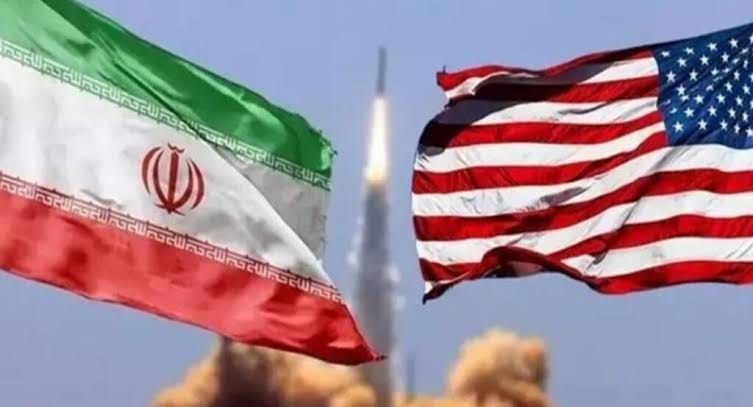
In a dramatic and rapidly evolving turn of events in the Middle East, U.S. President Donald Trump has announced a potential diplomatic breakthrough with Iran, claiming that “positive and constructive” discussions have taken place to end the ongoing regional conflict. However, the narrative remains heavily contested, as Tehran has officially distanced itself from these claims, creating a complex web of geopolitical uncertainty.
The “Epic Fury” Pause: Trump’s Strategic De-escalation?
President Trump took to his social media platform, Truth Social, to deliver what is being described as his most conciliatory message since the start of “Operation Epic Fury.” The President revealed that over the past 48 hours, the United States and Iran had engaged in high-level talks aimed at a “total resolution” of the confrontation in the Middle East.
In a move that surprised many defense analysts, Trump announced a five-day postponement of planned military strikes against Iran’s power plants and critical energy infrastructure.
“Based on the spirit and atmosphere of these constructive conversations… I have instructed the War Department to delay all military strikes on Iran’s power plants for five days,” Trump posted. He emphasized that the permanence of this stay would depend entirely on the “success of ongoing meetings.”
This marks a significant shift from his rhetoric just 24 hours prior, where he had issued a 48-hour ultimatum for Iran to reopen the Strait of Hormuz or face the total destruction of its energy sector.
Tehran’s Firm Rejection: “No Direct or Indirect Contact”
The diplomatic optimism radiating from the White House was quickly met with a cold reception in Tehran. The Iranian Foreign Ministry issued a formal statement categorically denying that any negotiations are currently underway.
“We deny the claims made by U.S. President Donald Trump regarding ongoing talks between the U.S. and Iran,” the ministry stated. They reiterated that Iran’s stance remains unchanged: negotiations will only be considered once Iran’s strategic wartime objectives are met.
Further complicating the situation, sources linked to the Islamic Revolutionary Guard Corps (IRGC) suggested that Trump’s sudden shift toward diplomacy was a sign of “backing down.” According to reports from Fars News Agency, an anonymous Iranian official claimed that Trump’s change of heart occurred only after realizing that Iran was prepared to retaliate by targeting power stations across all U.S.-aligned territories in West Asia.
The Economic Ripple Effect: Oil and Gas Markets React
Despite the conflicting reports, global markets responded to the news of a potential ceasefire with a sigh of relief. The mere mention of “positive talks” was enough to stabilize volatile energy prices.
Oil Prices: Brent Crude saw a massive 13% drop, falling to approximately $96 per barrel.
Stock Markets: London’s FTSE index climbed 0.5%, recovering from a sharp 2% slide earlier in the day.
Natural Gas: Prices tumbled from 159 pence per therm to roughly 139 pence per therm.
Financial analysts suggest that the markets are “pricing in hope,” betting that the five-day window will lead to a more permanent de-escalation, even if the public rhetoric remains hostile.
The Strategic Importance of the Strait of Hormuz
At the heart of this standoff is the Strait of Hormuz, the world’s most important oil transit chokepoint. Iran’s Foreign Ministry recently clarified its position, asserting that the Strait is “not closed” but is subject to strict “security measures” due to U.S. and Israeli aggression.
Iran maintains that it has only restricted vessels belonging to or affiliated with “aggressor nations.” However, the IRGC has warned that any strike on Iranian soil would result in a total blockade of the Strait until Iranian infrastructure is fully rebuilt.
The U.S. administration, meanwhile, views the reopening of the Strait as a non-negotiable prerequisite for any long-term peace deal.
Voices from Within: A Divided and Anxious Iran
On the ground in Iran, the civilian population remains on edge. Despite government-imposed internet restrictions, many citizens are following the news via VPNs and satellite feeds. The sentiment is a mix of exhaustion, skepticism, and dark humor.
A young man in Tehran noted that the end of the war would be “costly for the Iranian people,” regardless of whether the current government survives.
A woman from Northern Iran expressed frustration with the unpredictability of the U.S. President, stating, “Trump is driving us crazy.”
Another resident shared a sense of absurdity, mentioning how he and his friends “just started laughing” when they heard the latest updates, wondering at the surreal nature of their current lives.
Unanswered Questions and the Road Ahead
While the five-day pause provides a temporary breathing room, many critical questions remain:
What was the subject of the talks? If talks happened, were they about nuclear enrichment, a simple ceasefire, or the maritime security of the Gulf?
Is there a back-channel? It is common for the U.S. and Iran to communicate through intermediaries (like Oman or Switzerland). Tehran’s denial could be a public face-saving measure.
Will the “48-hour deadline” be reinstated? If no progress is seen by the end of the five-day window, the threat to Iran’s power grid remains active.
As the world watches the clock, the next 120 hours will be crucial in determining whether the Middle East moves toward a historic resolution or descends further into a catastrophic regional war.