Health Desk
Sandeep Dhand Nutritionist And Health Educator
Every year on 22 March, the world observes World Water Day to raise awareness about the importance of water and the growing challenges related to water scarcity. In 2026, the focus has become even more serious because water is no longer just a natural resource issue—it is now closely linked with climate change, human migration, health, and survival.
Today, millions of people around the world are struggling to access clean and safe water. Climate change is making the situation worse by causing extreme weather events like droughts and floods. These conditions are forcing people to leave their homes, creating a new kind of crisis known as climate mobility.
This article explains the global water crisis in simple language, its connection with climate change, and how it is affecting human lives.
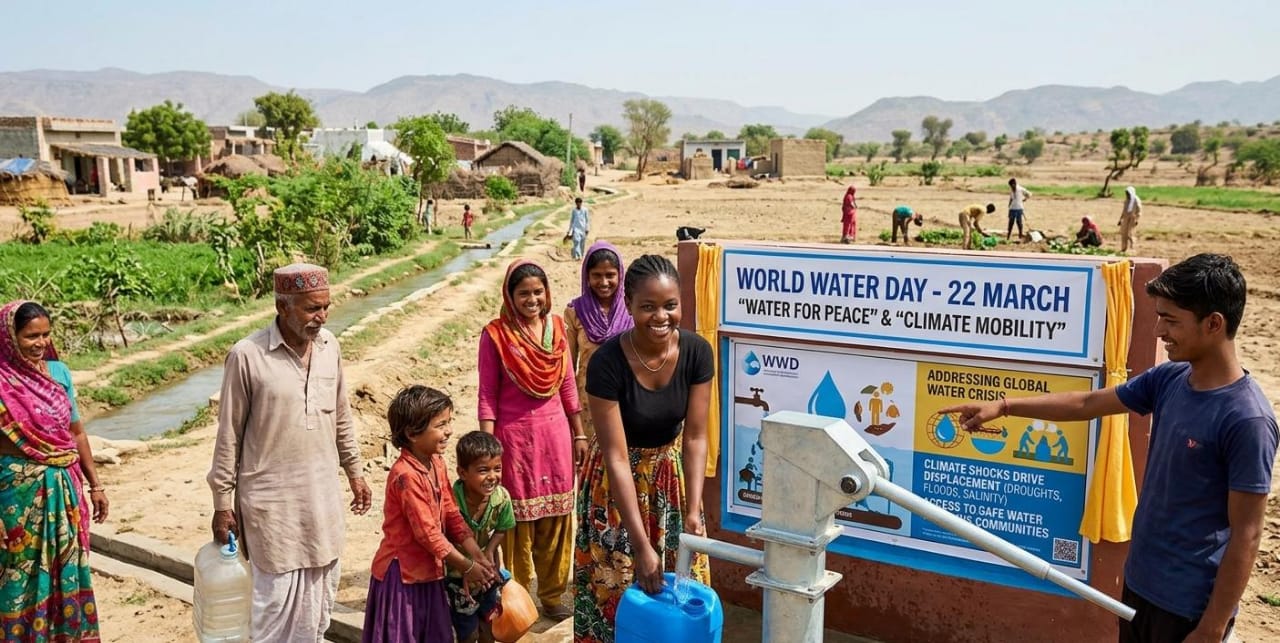
What is World Water Day?
World Water Day is an international event started by the United Nations to highlight the importance of freshwater. It reminds us that water is not unlimited and must be used wisely.
The main goals of this day are:
To promote access to clean water for all
To raise awareness about water conservation
To highlight global water-related challenges
To support sustainable development
Each year, a different theme is chosen. Recently, the themes have focused on climate change, groundwater, and water security.
Why Water is So Important for Life
Water is essential for all living beings. Humans, animals, and plants all depend on it for survival.
Basic Uses of Water
Drinking and cooking
Farming and food production
Hygiene and sanitation
Industrial use
Without water, life cannot exist. Yet, many people still do not have access to even the minimum amount of clean water needed for daily life.
Understanding the Global Water Crisis
The water crisis means a lack of access to safe and sufficient water. It is one of the biggest global problems today.
Key Facts
Billions of people face water shortages every year
Many regions depend on unsafe water sources
Groundwater levels are decreasing rapidly
Rivers and lakes are drying up
Main Causes of Water Crisis
Population growth
Overuse of water resources
Pollution
Climate change
Poor water management
Climate Change and Water: A Dangerous Connection
Climate change is deeply connected to the water crisis. Rising temperatures are affecting the natural water cycle.
How Climate Change Affects Water
Increased evaporation reduces water availability
Melting glaciers affect river flow
Irregular rainfall causes droughts and floods
Rising sea levels lead to saltwater intrusion
These changes are making water less predictable and more difficult to manage.
Droughts: When Water Disappears
Drought is a long period without rainfall. It leads to severe water shortages.
Effects of Drought
Crop failure and food shortages
Loss of income for farmers
Drinking water scarcity
Migration from rural areas
In many countries, drought has become more frequent due to climate change.
Floods: Too Much Water, Too Fast
Floods occur when there is excessive rainfall or when rivers overflow.
Impact of Floods
Destruction of homes and infrastructure
Contamination of drinking water
Spread of diseases
Loss of lives and livestock
Floods can damage water systems, making clean water unavailable even after the flood ends.
Water Pollution: A Hidden Danger
Even when water is available, it may not be safe to drink.
Sources of Water Pollution
Industrial waste
Agricultural chemicals
Sewage discharge
Plastic waste
Polluted water can cause serious health problems, including:
Diarrhea
Cholera
Skin infections
Salinity: When Water Becomes Too Salty
In coastal areas, rising sea levels are causing saltwater to mix with freshwater sources.
Effects of Salinity
Drinking water becomes unsafe
Crops cannot grow properly
Soil quality decreases
This problem is increasing in many parts of the world due to climate change.
Climate Mobility: Forced Migration Due to Water Crisis
One of the most serious outcomes of the water crisis is climate mobility.
What is Climate Mobility?
It refers to people moving from one place to another due to climate-related problems.
How Water Drives Migration
Lack of water forces people to leave villages
Floods destroy homes and livelihoods
Unsafe water leads to health risks
Millions of people are already being displaced because of water-related issues.
Impact on Farmers and Rural Communities
Farmers are among the most affected by water scarcity.
Challenges Faced by Farmers
Unpredictable rainfall
Lack of irrigation water
Soil degradation
Reduced crop yield
This leads to poverty and migration to cities in search of better opportunities.
Urban Water Crisis
Cities are also facing water shortages due to increasing population and poor planning.
Common Problems in Cities
Water supply shortages
Over-extraction of groundwater
Pollution of water bodies
Unequal distribution
In some cities, people have to wait in long lines just to collect water.
Health Problems Linked to Water Crisis
Water is closely linked to health.
Health Issues Due to Lack of Clean Water
Waterborne diseases
Malnutrition
Poor hygiene
Increased child mortality
Access to clean water is essential for a healthy life.
Women and Children: The Most Affected
In many parts of the world, women and children are responsible for collecting water.
Challenges They Face
Walking long distances
Missing school or work
Physical and mental stress
Providing nearby water sources can improve their quality of life.
Water and Education
Lack of water affects education, especially for girls.
How Water Impacts Education
Schools without water facilities
Poor sanitation
Increased absenteeism
Ensuring water access in schools is very important.
Economic Impact of Water Crisis
Water scarcity affects the economy at both local and global levels.
Economic Effects
Reduced agricultural production
Increased food prices
Loss of jobs
Higher healthcare costs
Water is essential for economic development.
Solutions to the Water Crisis
Although the situation is serious, there are solutions.
- Water Conservation
Use water wisely
Fix leaks
Avoid wastage - Rainwater Harvesting
Collect rainwater for later use
Recharge groundwater - Wastewater Treatment
Reuse water after cleaning
Reduce pollution - Sustainable Agriculture
Use drip irrigation
Grow water-efficient crops - Protecting Water Sources
Clean rivers and lakes
Prevent pollution
Role of Governments
Governments play a major role in solving the water crisis.
Government Actions Needed
Build water infrastructure
Implement water policies
Promote awareness programs
Support research and innovation
Role of Individuals
Every person can contribute to saving water.
Simple Steps to Save Water
Turn off taps when not in use
Use buckets instead of showers
Avoid wasting drinking water
Spread awareness
Small actions can make a big difference.
Importance of Sustainable Water Management
Sustainable water management means using water in a way that meets current needs without harming future generations.
Key Principles
Efficient use
Equal distribution
Environmental protection
Water and Future Generations
If we do not act now, future generations will face severe water shortages.
What We Must Do
Educate people about water conservation
Protect natural resources
Support global efforts
Conclusion
World Water Day is not just a day to celebrate—it is a reminder of a growing global crisis. Water is at the center of climate change, human health, and migration.
Droughts, floods, pollution, and salinity are making water scarce and unsafe. This is forcing people to leave their homes and creating serious social and economic problems.
The solution lies in collective action. Governments, communities, and individuals must work together to protect and manage water resources.
Saving water today means saving life tomorrow.