National/ International/ Business Desk
11 July
Sandeep Dhand Ludhiana
Journalist And Research Analysist
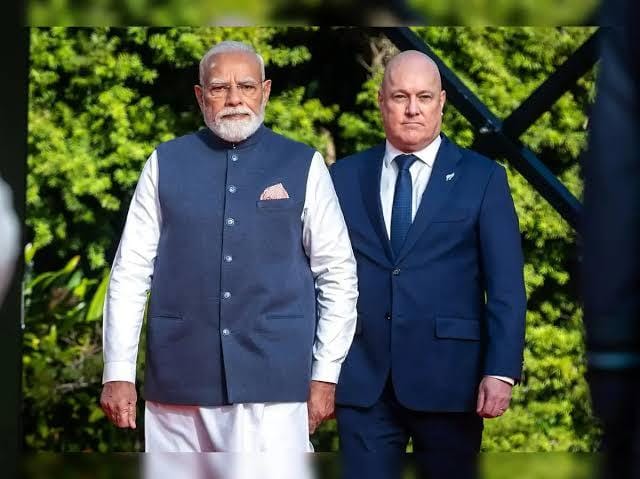
India and New Zealand have taken an important step in strengthening their bilateral relationship by upgrading their ties to a Strategic Partnership. The decision was announced after high-level talks between the leaders of the two countries, with both sides agreeing to expand cooperation in trade, defence, maritime security, and regional affairs. They have also set an ambitious target of doubling annual bilateral trade in goods and services to around ₹35,000 crore (NZ$7 billion) by 2030.
The meeting produced 18 major outcomes, including the signing of 10 agreements covering different areas of cooperation. Among the most significant decisions was the adoption of a five-year roadmap to deepen bilateral relations, a framework to enhance cooperation in the Indo-Pacific region, and a mutual logistics support agreement between the Indian Navy and the New Zealand Defence Force. These measures are expected to improve coordination in defence activities, humanitarian assistance, disaster relief, and maritime operations.
Both countries reaffirmed their shared commitment to a free, open, secure, and prosperous Indo-Pacific region. They emphasized the importance of protecting sovereignty, territorial integrity, and a rules-based international order. The two sides also underlined the need to uphold international law, particularly the 1982 United Nations Convention on the Law of the Sea (UNCLOS), while supporting freedom of navigation, overflight, and the peaceful use of the world’s oceans.
To further strengthen cooperation in maritime affairs, both countries agreed to establish a Maritime Security Dialogue. This new platform will promote closer coordination, information sharing, and cooperation on regional security challenges, helping both nations respond more effectively to emerging issues in the Indo-Pacific.
The visit also came soon after the signing of the India-New Zealand Free Trade Agreement (FTA). Both governments pledged to work closely for its early implementation, believing that the agreement will create new opportunities for businesses, increase investments, improve market access, and generate employment in both countries. The trade target for 2030 reflects the confidence of both nations in expanding economic cooperation over the coming years.
The discussions also covered several international issues, including the security situation in West Asia. Both sides expressed concern over rising tensions in the region and called on all parties to exercise restraint, reduce hostilities, and ensure the safety of civilians. They also stressed the importance of maintaining freedom of navigation through the Strait of Hormuz, a key global shipping route, and opposed any disruption to international maritime trade.
The two countries reiterated that lasting peace can only be achieved through dialogue, diplomacy, and respect for international law. They also supported meaningful reforms of the United Nations, including the expansion of the Security Council to make it more representative and effective in addressing modern global challenges.
The latest agreements mark a significant milestone in India-New Zealand relations. By strengthening cooperation in trade, defence, maritime security, and global governance, both countries have laid the foundation for a stronger long-term partnership. If the planned initiatives are implemented successfully, the relationship is expected to deliver economic benefits, improve regional stability, and create new opportunities for cooperation in the years ahead.