National / Punajb Desk
Sandeep Dhand Ludhiana
Journalist and Research Analysist
Every year on April 24, India celebrates National Panchayati Raj Day to recognize the importance of local self-government in rural areas. This day marks the historic implementation of the 73rd Constitutional Amendment Act, which came into effect in 1993 and gave constitutional status to Panchayati Raj Institutions (PRIs). These institutions play a key role in strengthening democracy at the grassroots level.
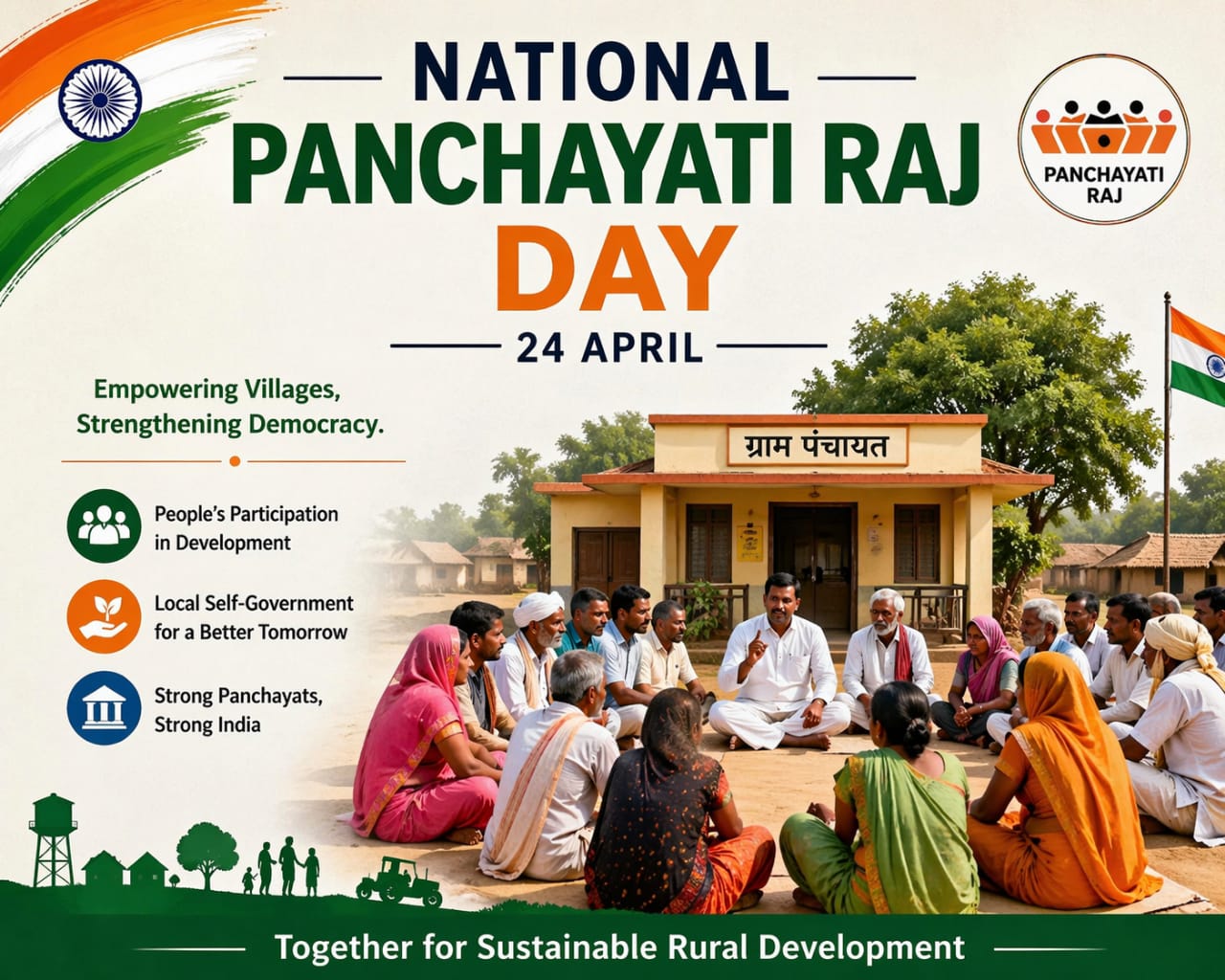
Panchayati Raj is a system through which people in villages can participate directly in decision-making and development activities. It works through a three-tier structure—Gram Panchayat at the village level, Panchayat Samiti at the block level, and Zila Parishad at the district level. This system ensures that power is not only concentrated at the top but is also distributed among local communities.
On this occasion, various programs and events are organized across the country. Government officials, local representatives, and citizens come together to discuss development plans and achievements. Awards are also given to the best-performing Panchayats that have contributed significantly to rural development, sanitation, education, and health services.
One of the main objectives of National Panchayati Raj Day is to promote transparency, accountability, and people’s participation in governance. It encourages villagers to take an active role in solving local issues such as water supply, road construction, education, and healthcare facilities. By involving people in decision-making, the government ensures that development is more effective and inclusive.
The Panchayati Raj system has also played an important role in empowering women and marginalized communities. A significant number of seats in Panchayats are reserved for women, Scheduled Castes, and Scheduled Tribes. This has helped in giving a voice to those who were previously underrepresented in governance.
In recent years, digital technology has further strengthened Panchayati Raj institutions. Many Panchayats now use online platforms to maintain records, manage funds, and provide services to citizens. This has improved efficiency and reduced corruption, making governance more transparent.
However, there are still challenges that need attention. Issues such as lack of funds, limited training of local representatives, and administrative hurdles sometimes affect the effective functioning of Panchayats. The government continues to work on these challenges to make the system more robust and efficient.
National Panchayati Raj Day is not just a celebration but also a reminder of the importance of local governance in building a strong and democratic nation. It highlights the role of ordinary citizens in shaping their own future and contributing to the development of the country.
As India moves forward, strengthening Panchayati Raj institutions will remain essential for achieving inclusive growth and ensuring that development reaches even the most remote villages.