Health Desk
Sandeep Dhand Nutritionist And Health Educator
Introduction
Pregnancy and breastfeeding are two of the most important stages in a woman’s life. During these periods, a mother’s body works continuously to support the healthy growth and development of her baby. The nutrients she consumes not only provide energy for her daily activities but also help in the formation of the baby’s brain, bones, muscles, organs, and immune system. After childbirth, the body needs additional nourishment to recover from delivery and produce healthy breast milk. Therefore, maintaining a balanced and nutritious diet throughout pregnancy and breastfeeding is essential for both the mother and the baby.
Many people believe that pregnant women should “eat for two,” but this is a common misconception. Pregnancy does not require eating twice as much food. Instead, it requires eating foods that are rich in nutrients. A well-balanced diet containing fruits, vegetables, whole grains, dairy products, pulses, nuts, seeds, eggs, fish, and lean meat provides the body with the nutrients it needs. Choosing nutritious foods rather than consuming extra calories is the key to a healthy pregnancy and successful breastfeeding.
Every pregnancy is unique. Some women experience morning sickness, food cravings, or fatigue during the first trimester, while others may experience heartburn, constipation, or swelling during the later months. These changes are natural and are caused by hormonal and physical changes in the body. Healthy eating habits, adequate hydration, and regular meals can help reduce these discomforts while ensuring that the baby receives the nutrients needed for proper growth.
A balanced diet during pregnancy also lowers the risk of nutritional deficiencies, supports healthy weight gain, strengthens the immune system, and prepares the mother’s body for childbirth and breastfeeding. Regular prenatal check-ups, along with healthy food choices, are equally important for ensuring a safe and healthy pregnancy.
Why Good Nutrition Is Important During Pregnancy
The food a mother eats during pregnancy directly affects her own health as well as the baby’s growth and development. Nutrients obtained from food are transported through the placenta, providing the baby with everything needed to build healthy organs, bones, muscles, and the nervous system.
Good nutrition during pregnancy helps reduce the risk of anemia, low birth weight, premature birth, and certain birth defects. It also improves the mother’s energy levels, supports healthy blood circulation, strengthens bones, and helps the body cope with the physical demands of pregnancy.
A healthy pregnancy diet should include all major nutrients because each one has a unique function in the body. Instead of depending on one or two foods, mothers should consume a variety of nutritious foods every day.
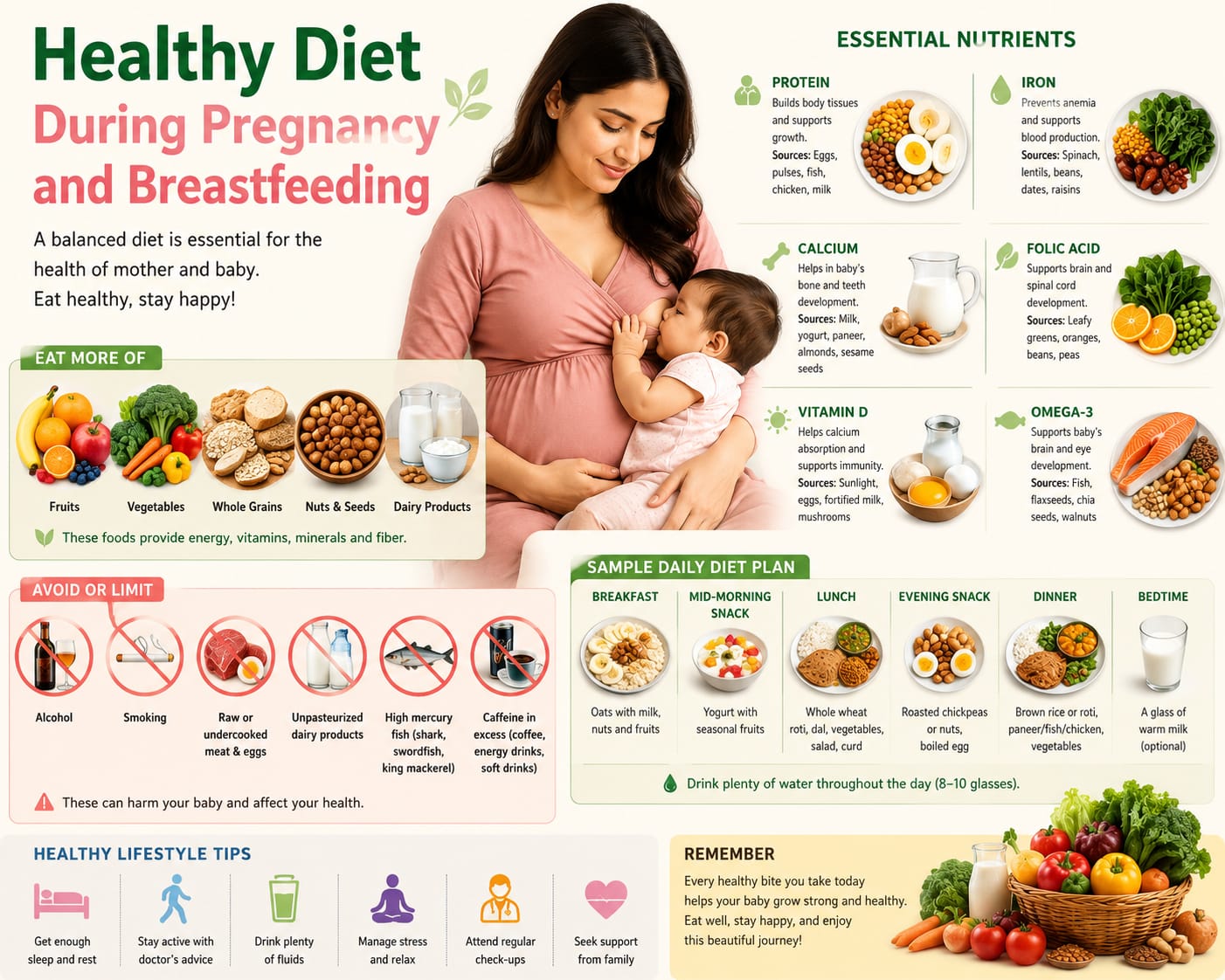
Essential Nutrients for a Healthy Pregnancy
Protein
Protein is one of the most important nutrients during pregnancy. It supports the development of the baby’s muscles, skin, organs, and tissues while also helping the placenta grow properly. Protein also assists in repairing the mother’s body tissues and maintaining muscle health.
Good sources of protein include eggs, milk, yogurt, paneer, chicken, fish, lentils, chickpeas, kidney beans, soybeans, tofu, nuts, and seeds.
One boiled egg provides approximately 6 g of protein.
One cup of milk contains about 8 g of protein and 300 mg of calcium.
One cup of cooked lentils provides nearly 18 g of protein, 15 g of fiber, and 6.5 mg of iron.
Including a protein-rich food in every meal helps support healthy fetal growth and keeps the mother feeling full and energized.
Folic Acid
Folic acid is especially important during the early weeks of pregnancy because it supports the healthy development of the baby’s brain and spinal cord. It significantly reduces the risk of neural tube defects and is usually recommended before conception and during the first trimester.
Excellent food sources include spinach, broccoli, mustard greens, beans, peas, oranges, and fortified cereals.
One cup of cooked spinach provides about 260 mcg of folate, 6 mg of iron, and 245 mg of calcium.
Iron
Iron is essential because a pregnant woman’s blood volume increases significantly. Iron helps produce hemoglobin, which carries oxygen throughout the body. Low iron intake can lead to anemia, causing tiredness, weakness, dizziness, and reduced immunity.
Iron-rich foods include spinach, lentils, chickpeas, beans, dates, raisins, lean meat, poultry, and fish.
One cup of cooked chickpeas contains approximately 15 g of protein, 4.7 mg of iron, and 12 g of fiber.
About 100 g of lean beef provides nearly 2.6 mg of iron and 26 g of protein.
Eating foods rich in vitamin C, such as oranges, guava, tomatoes, or lemons, with iron-rich meals helps improve iron absorption.
Calcium
Calcium is necessary for developing strong bones and teeth in the growing baby. It also supports the mother’s bones, muscles, and nervous system. If the mother’s diet lacks calcium, the baby may draw calcium from her bones.
Good sources include milk, yogurt, paneer, cheese, tofu, sesame seeds, almonds, and green leafy vegetables.
One cup of yogurt provides around 280–300 mg of calcium and 8–10 g of protein.
About 30 g of paneer contains approximately 200 mg of calcium and 7 g of protein.
Vitamin D
Vitamin D helps the body absorb calcium and supports healthy bones, muscles, and immunity. It also contributes to the baby’s bone development.
Natural sunlight is the best source of vitamin D. Other sources include fortified milk, eggs, mushrooms exposed to sunlight, and fatty fish.
One egg provides around 1 mcg of vitamin D along with 6 g of protein.
Omega-3 Fatty Acids
Omega-3 fatty acids are essential for the baby’s brain and eye development. They also support heart health and reduce inflammation.
Healthy sources include salmon, sardines, walnuts, flaxseeds, and chia seeds.
One tablespoon of flaxseeds contains approximately 2.3 g of omega-3 fatty acids and 3 g of fiber.
A handful of walnuts provides about 2.5 g of omega-3 fats.
Fiber
Fiber supports healthy digestion and helps prevent constipation, which is common during pregnancy due to hormonal changes.
Whole grains, fruits, vegetables, beans, lentils, nuts, and seeds are excellent sources.
One medium apple provides about 4 g of fiber.
One pear contains nearly 6 g of fiber.
One cup of cooked oats provides approximately 4 g of fiber and 6 g of protein.
Healthy Foods to Eat During Pregnancy
A healthy pregnancy diet should include a variety of fresh and minimally processed foods. Eating different types of foods ensures that both the mother and baby receive all essential nutrients.
Fresh fruits and vegetables should be included in every meal because they are rich in vitamins, minerals, antioxidants, and dietary fiber. Green leafy vegetables such as spinach, fenugreek leaves, and broccoli provide folate, calcium, and iron. Carrots and pumpkins are rich in beta-carotene, while fruits like oranges, guava, apples, bananas, pomegranates, berries, and kiwi provide vitamins and natural antioxidants.
One medium guava provides approximately 125–150 mg of vitamin C and 5 g of fiber.
One orange contains around 70 mg of vitamin C, which helps improve iron absorption.
One banana provides about 420 mg of potassium, supporting healthy muscle and nerve function.
Whole grains such as brown rice, whole wheat, oats, barley, millets, and quinoa provide complex carbohydrates that release energy slowly. They help maintain stable blood sugar levels and keep the mother feeling full for longer periods.
Dairy products such as milk, yogurt, paneer, and cheese provide protein, calcium, and vitamin B12, all of which are essential for healthy fetal growth.
Healthy fats from almonds, walnuts, peanuts, chia seeds, flaxseeds, sesame seeds, olive oil, and avocados support hormone production and brain development.
Around 28 g of almonds provide 6 g of protein, 75 mg of calcium, and 3.5 g of fiber.
One tablespoon of chia seeds contains approximately 5 g of fiber, 2 g of protein, and 2.5 g of omega-3 fatty acids.
Hydration is equally important during pregnancy. Drinking enough water helps maintain blood circulation, regulate body temperature, support digestion, and reduce the risk of constipation and urinary tract infections. Water should be the primary beverage, while milk, soups, buttermilk, coconut water, and fresh fruits can also contribute to daily fluid intake.
Healthy snacks such as yogurt with fruit, roasted chickpeas, mixed nuts, boiled eggs, sprouts, whole-grain sandwiches, and homemade smoothies provide extra nutrients between meals and help maintain steady energy levels.
Foods to Avoid During Pregnancy
Although most nutritious foods are safe during pregnancy, some foods should be avoided because they may increase the risk of foodborne illnesses or expose the baby to harmful substances. Making safe food choices is just as important as eating healthy foods.
Raw or undercooked meat, poultry, fish, and eggs may contain harmful bacteria or parasites that can cause serious infections. These foods should always be cooked thoroughly before consumption.
Unpasteurized milk and dairy products should also be avoided because they may contain harmful bacteria such as Listeria, which can be dangerous during pregnancy. Always choose pasteurized milk, yogurt, and cheese.
Pregnant women should avoid fish that contain high levels of mercury, such as shark, swordfish, king mackerel, and tilefish. High mercury intake may affect the baby’s brain and nervous system. Instead, choose low-mercury fish like salmon, sardines, trout, or tilapia.
Alcohol should be completely avoided throughout pregnancy because there is no known safe amount. Drinking alcohol can affect the baby’s growth and brain development and increase the risk of birth defects.
Smoking and tobacco use should also be avoided because they reduce oxygen supply to the baby and increase the risk of premature birth, low birth weight, and pregnancy complications.
Caffeine should be consumed in moderation. Excessive intake of coffee, tea, energy drinks, and caffeinated soft drinks should be avoided. Instead, mothers can choose healthier beverages such as milk, fresh fruit juices without added sugar, lemon water, or coconut water.
Highly processed foods, packaged snacks, sugary desserts, and foods rich in trans fats should also be limited. These foods are often high in calories but low in nutrients and may contribute to excessive weight gain.
Managing Common Pregnancy Problems Through Diet
Many women experience physical discomfort during pregnancy because of hormonal and body changes. Fortunately, healthy eating habits can help reduce many of these common problems.
Morning sickness is common during the first trimester. Eating small meals every two to three hours instead of three large meals may reduce nausea. Dry crackers or toast before getting out of bed, ginger tea, or ginger biscuits may also provide relief. Drinking fluids between meals rather than during meals can further reduce nausea.
Heartburn often develops during the second and third trimesters because the growing baby places pressure on the stomach. Eating smaller meals, avoiding fried and spicy foods, chewing food slowly, and not lying down immediately after eating can help reduce heartburn.
Constipation is another common complaint during pregnancy. Increasing fiber intake by eating whole grains, fruits, vegetables, beans, and lentils can improve digestion. Drinking enough water and staying physically active also help maintain regular bowel movements.
Some women experience swelling in the feet and ankles, especially during the later months of pregnancy. Drinking enough water, reducing highly processed salty foods, and resting with the feet elevated may help reduce mild swelling. However, sudden or severe swelling should always be discussed with a healthcare provider.
Healthy Weight Gain During Pregnancy
Weight gain during pregnancy is natural and necessary because it supports the baby’s growth, the placenta, increased blood volume, and amniotic fluid. The recommended weight gain depends on the mother’s weight before pregnancy.
Rather than focusing on eating larger portions, pregnant women should concentrate on eating balanced meals rich in nutrients. Healthy weight gain comes from nutritious foods rather than junk food.
Regular physical activity, such as walking or prenatal yoga (with medical approval), can also help maintain fitness during pregnancy, improve blood circulation, reduce back pain, and prepare the body for childbirth.
Nutrition After Childbirth
The need for good nutrition does not end after delivery. In fact, the body requires adequate nutrients to recover from childbirth, heal damaged tissues, restore energy, and begin producing breast milk.
Many mothers become so busy caring for their newborn that they neglect their own nutrition. However, eating balanced meals after delivery helps speed up recovery, improves energy levels, supports emotional well-being, and prepares the body for successful breastfeeding.
Protein remains essential after childbirth because it supports tissue repair and healing.
One serving of grilled chicken (100 g) provides approximately 31 g of protein.
One cup of Greek yogurt provides about 17–20 g of protein and 200 mg of calcium.
Iron-rich foods remain important because mothers may lose blood during delivery.
Foods such as spinach, lentils, beans, dates, raisins, lean meat, and fortified cereals help restore iron stores.
Healthy Diet for Breastfeeding Mothers
Breastfeeding is the best source of nutrition for newborn babies. Breast milk contains the perfect balance of carbohydrates, proteins, healthy fats, vitamins, minerals, enzymes, and antibodies that help protect babies from infections and support healthy growth.
Producing breast milk requires additional energy. Therefore, breastfeeding mothers should consume enough nutritious foods every day instead of skipping meals.
A healthy breastfeeding diet should include:
Whole grains
Fresh fruits and vegetables
Milk and dairy products
Eggs
Fish
Chicken
Lentils
Beans
Soy products
Nuts and seeds
Protein supports milk production and helps repair body tissues after childbirth.
One cup of milk provides 8 g of protein and 300 mg of calcium.
One boiled egg provides 6 g of protein.
One cup of cooked lentils contains approximately 18 g of protein.
Calcium remains essential because breast milk contains calcium that is supplied from the mother’s body.
Good sources include milk, yogurt, paneer, tofu, almonds, sesame seeds, and green leafy vegetables.
Healthy fats also remain important because they contribute to the baby’s brain development.
Foods rich in omega-3 fatty acids include salmon, walnuts, flaxseeds, and chia seeds.
Hydration is equally important during breastfeeding. Mothers should drink water regularly throughout the day because breast milk contains a large amount of water. Milk, soups, coconut water, and buttermilk are also healthy options.
Foods That Support Breast Milk Production
Many families believe that certain foods naturally increase breast milk production. While no single food can guarantee a higher milk supply, eating a balanced diet and staying well hydrated can support healthy lactation. Some traditional foods have been used for generations and may be included as part of a nutritious diet.
Oats are one of the most popular foods for breastfeeding mothers because they are rich in complex carbohydrates, iron, and fiber. One cup of cooked oats provides approximately 6 g of protein, 4 g of fiber, and important minerals such as magnesium and iron.
Fenugreek seeds are commonly used in many cultures to support breastfeeding. They can be added to curries or soaked in water before use. However, they should be consumed in moderation and only after consulting a healthcare professional if the mother has any medical condition.
Fennel seeds, cumin seeds, garlic, sesame seeds, and moringa (drumstick) leaves are also traditional foods often included in breastfeeding diets. Although scientific evidence is still limited, these foods are nutritious and can be part of a balanced meal.
Nuts and seeds such as almonds, walnuts, peanuts, flaxseeds, and chia seeds provide healthy fats, protein, vitamins, and minerals.
A handful of almonds provides about 6 g of protein, 75 mg of calcium, and 3.5 g of fiber.
One tablespoon of flaxseeds contains around 2.3 g of omega-3 fatty acids and 3 g of fiber.
Fresh fruits and vegetables are equally important because they supply antioxidants, vitamins, and minerals that support the mother’s health.
Foods to Limit While Breastfeeding
Breastfeeding mothers usually do not need to avoid many foods unless they notice that a particular food consistently causes discomfort to their baby or unless advised by a healthcare provider.
Highly processed foods, sugary snacks, and deep-fried foods should be limited because they provide excess calories with very little nutrition.
Alcohol should be avoided while breastfeeding because it can pass into breast milk and affect the baby.
Caffeine should also be consumed in moderation. Large amounts of coffee, tea, or energy drinks may make some babies restless or interfere with their sleep.
Mothers should avoid smoking and tobacco products completely because harmful chemicals can pass to the baby through breast milk and secondhand smoke.
Instead of following unnecessary food restrictions, breastfeeding mothers should focus on eating a wide variety of healthy foods every day.
Sample Daily Meal Plan for Pregnancy and Breastfeeding
A balanced daily meal plan can help mothers meet their nutritional needs without making eating complicated.
Breakfast:
A bowl of oatmeal prepared with milk, topped with almonds, walnuts, flaxseeds, and fresh banana slices.
Nutrition: Protein: 15–18 g | Calcium: 350 mg | Fiber: 8 g
Mid-Morning Snack:
One bowl of yogurt with fresh seasonal fruits such as apple, berries, or guava.
Nutrition: Protein: 10 g | Calcium: 300 mg | Vitamin C: 80–150 mg
Lunch:
Two whole wheat chapatis, one bowl of dal, one serving of seasonal vegetables, one bowl of curd, and fresh salad.
Nutrition: Protein: 22–25 g | Iron: 5–6 mg | Fiber: 10–12 g
Evening Snack:
Roasted chickpeas, sprouts salad, or one boiled egg with lemon water.
Nutrition: Protein: 12–15 g | Iron: 2–4 mg
Dinner:
Brown rice or whole wheat chapatis with grilled chicken, fish, paneer, or tofu along with cooked vegetables.
Nutrition: Protein: 25–30 g | Calcium: 250 mg | Iron: 3–5 mg
Bedtime:
One glass of warm milk.
Nutrition: Protein: 8 g | Calcium: 300 mg
This meal plan is only an example. Individual nutritional needs may vary depending on age, health condition, physical activity, and medical advice.
Healthy Lifestyle Tips for Mothers
Good nutrition works best when combined with a healthy lifestyle. Mothers should try to eat meals on time instead of skipping them. Small and frequent meals are often easier to digest during pregnancy and breastfeeding.
Drinking enough water throughout the day is essential for maintaining hydration and supporting breast milk production. Most mothers should keep a bottle of water nearby and drink whenever they feel thirsty.
Adequate sleep and rest are also important. Although caring for a newborn can make sleeping difficult, mothers should rest whenever possible. Family support can make a big difference during this period.
Light physical activity, such as walking or postnatal exercises approved by a healthcare provider, helps improve blood circulation, maintain a healthy weight, reduce stress, and improve overall well-being.
Good hygiene should always be maintained while preparing meals. Fruits and vegetables should be washed thoroughly, foods should be cooked properly, and leftovers should be stored safely to reduce the risk of foodborne illness.
Regular prenatal and postnatal check-ups should never be missed. Healthcare professionals can monitor the mother’s health, assess the baby’s growth, and recommend supplements such as iron, calcium, vitamin D, or folic acid when necessary.
Conclusion
Pregnancy and breastfeeding are remarkable stages that require extra care, proper nutrition, and a healthy lifestyle. Every meal a mother eats contributes not only to her own health but also to the healthy growth and development of her baby. Choosing a balanced diet rich in protein, calcium, iron, folic acid, healthy fats, vitamins, minerals, and fiber helps support a healthy pregnancy, smooth recovery after childbirth, and successful breastfeeding.
There is no need for expensive foods or strict diets. Simple homemade meals prepared with fresh fruits, vegetables, whole grains, dairy products, pulses, nuts, seeds, eggs, fish, or lean meat can provide almost all the nutrients needed during this special time. Staying hydrated, getting enough rest, remaining physically active, and following medical advice are equally important.
By making healthy food choices every day, mothers can protect their own well-being while giving their babies the best possible start in life. A nutritious diet during pregnancy and breastfeeding is an investment in the lifelong health of both mother and child.