Business/ National Desk
11 July
Sandeep Dhand Ludhiana
Journalist And Research Analysist
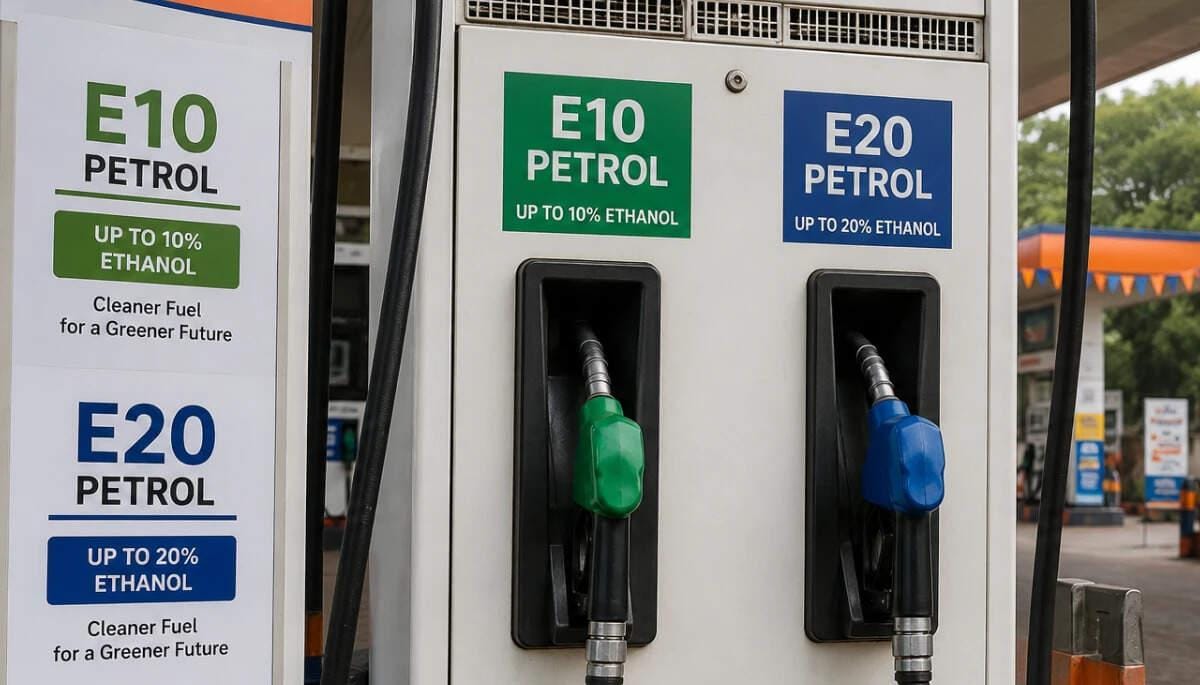
Vehicles running on E20 petrol, a fuel containing 20% ethanol and 80% petrol, may experience a 3% to 5% drop in mileage compared to regular petrol. While this has raised concerns among some vehicle owners, experts say the overall advantages of E20 are much greater than the slight reduction in fuel efficiency.
E20 is designed to reduce the use of fossil fuels and increase the use of renewable energy. Ethanol is produced from agricultural sources such as sugarcane, maize, and other plant-based materials. Using more ethanol helps reduce dependence on imported crude oil, supports domestic agriculture, and contributes to cleaner energy production.
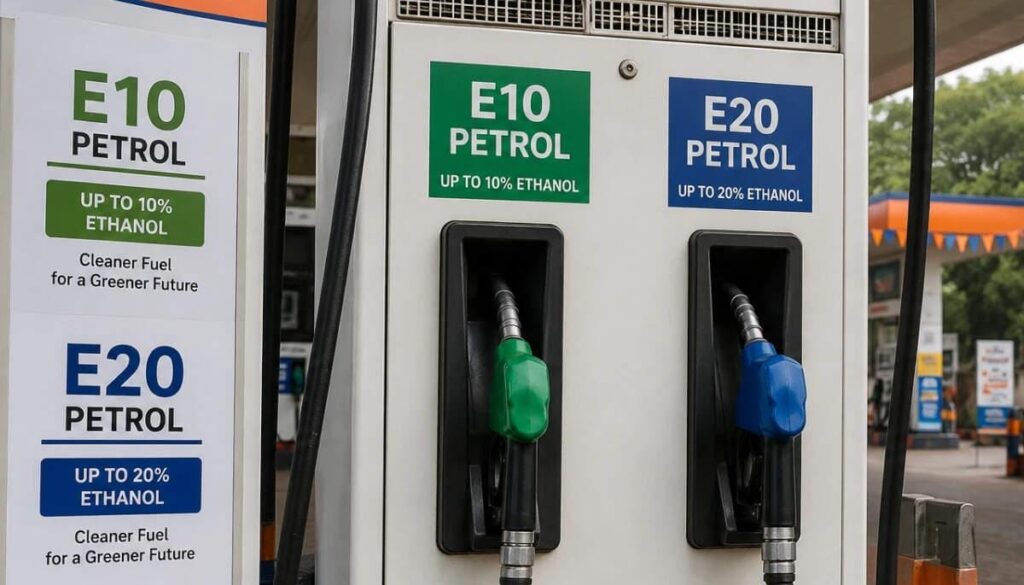
Although some vehicles may consume slightly more fuel with E20, the blend offers several important benefits. It has a higher octane rating, which improves engine performance and reduces the chances of engine knocking. The fuel burns more completely, resulting in smoother acceleration, better pickup, cleaner engine operation, and lower carbon emissions over its life cycle. These features make E20 a more environmentally friendly fuel than conventional petrol.
The introduction of E20 is not a sudden decision. Ethanol blending has been tested and gradually expanded over many years. Extensive research, laboratory testing, and real-world trials have been carried out to ensure that the fuel is safe and suitable for modern vehicles. Before nationwide implementation, engineers examined engine durability, fuel system performance, material compatibility, corrosion resistance, vehicle drivability, and exhaust emissions.
Concerns have also been raised about the impact of E20 on older vehicles. However, testing has shown that vehicles designed to be compatible with E20 can use the fuel safely without significant issues. No widespread evidence has emerged showing that E20 causes corrosion or serious engine damage when used in approved vehicles.
Another common question is whether E20 petrol will always be cheaper than regular petrol. The answer is no. The price of E20 depends on several factors, including the cost of producing ethanol and the international price of crude oil. Since ethanol prices are often fixed to provide fair returns to farmers, E20 may sometimes cost the same as—or even more than—regular petrol, especially when global oil prices fall.
The shift towards E20 is part of a broader effort to improve energy security and reduce environmental pollution. Increasing ethanol production also creates new opportunities for farmers by providing an additional market for agricultural crops used in ethanol manufacturing.
For consumers, the slight reduction in mileage is expected to be balanced by cleaner emissions, improved engine performance, and long-term environmental benefits. Vehicle owners are encouraged to check whether their vehicles are compatible with E20 fuel and rely on verified technical information rather than rumours or misleading claims.
As the transportation sector moves toward cleaner energy solutions, E20 petrol represents an important step in reducing carbon emissions while strengthening the country’s renewable fuel ecosystem.