Health Desk
Sandeep Dhand Nutritionist And Health Educator
🔴 Introduction
Our heart is one of the most important organs in the body. It works day and night without rest. It pumps blood to every part of the body so oxygen and nutrients can reach the brain, muscles, and other organs.
Normally, the heart beats in a regular rhythm — not too fast and not too slow.
🔴 When the heart beats abnormally, the condition is called Arrhythmia.
Arrhythmia can be mild in some people, but in others, it can be serious and even life-threatening if not treated properly.
🔴 What Is Arrhythmia?
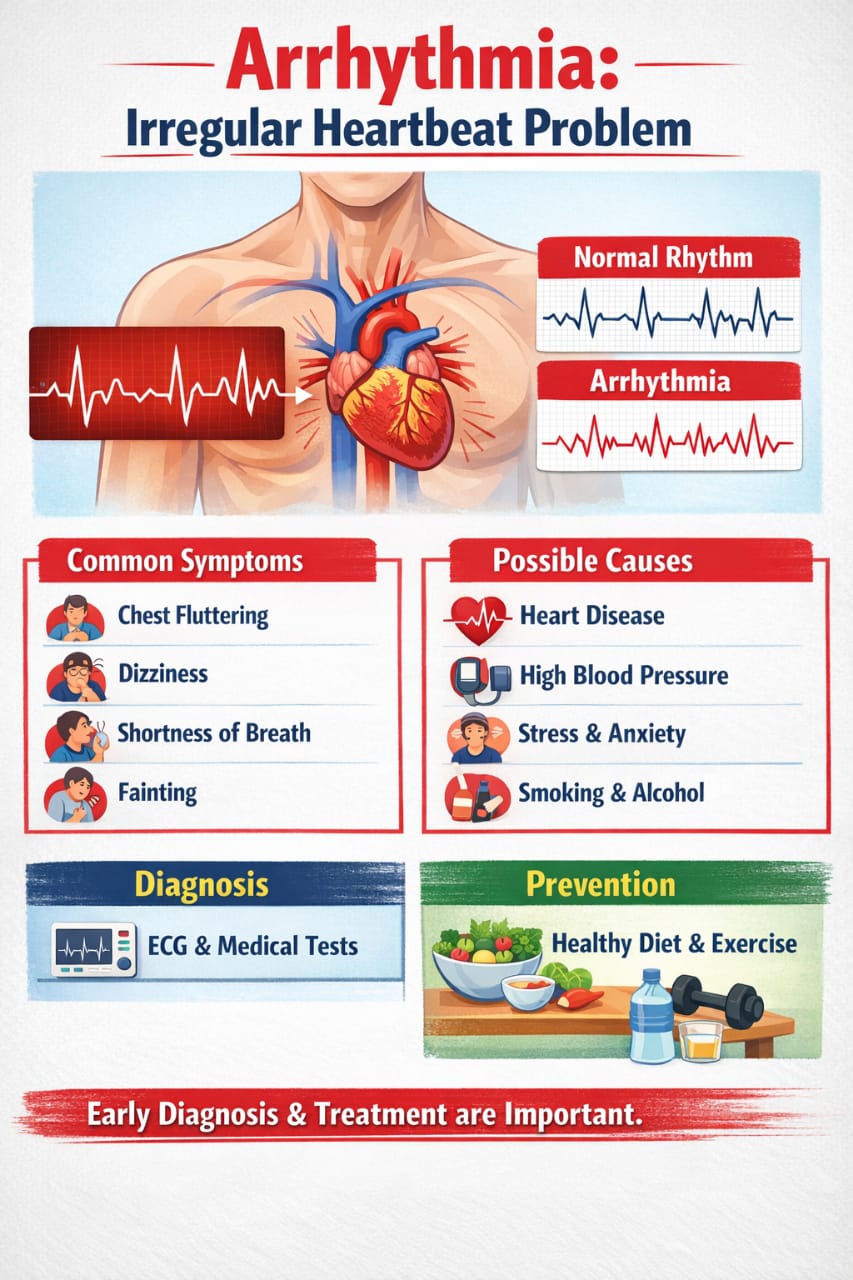
Arrhythmia means irregular heartbeat.
The heart may:
- Beat too fast
- Beat too slow
- Skip beats
- Beat in an irregular pattern
🔴 A normal resting heart rate for adults is 60–100 beats per minute.
If the heartbeat goes outside this range or becomes irregular, it is called arrhythmia.
🔴 How the Heart Normally Works
To understand arrhythmia, we must understand how the heart works.
The heart has its own electrical system.
🔴 The SA node (Sinoatrial Node) is the heart’s natural pacemaker.
It sends electrical signals that:
- Start the heartbeat
- Travel through heart muscles
- Make the heart contract and pump blood
If this electrical system is disturbed, the heartbeat becomes abnormal — this is arrhythmia.
🔴 If Someone Has Arrhythmia, What Happens?
(ਜੇ ਇਹ ਹੋਵੇ ਤਾਂ ਕੀ ਹੁੰਦਾ ਹੈ)
When arrhythmia happens, the heart cannot pump blood properly.
- Poor Blood Flow
- Heart may not fill properly
- Less blood is pumped
- Brain and body get less blood
This may cause:
Weakness
Dizziness
Confusion
- Reduced Oxygen Supply
Blood carries oxygen.
If blood flow is low:
Brain gets less oxygen
Muscles feel weak
Person feels tired easily - Risk of Blood Clots
In some types (especially atrial fibrillation):
- Blood may collect in heart chambers
- Clots may form
- Clot can travel to brain
This can cause a stroke.
- Severe Cases
- Heart may stop beating properly
- Cardiac arrest may occur
Immediate medical help is required.
🔴 Types of Arrhythmia
- Tachycardia (Fast Heartbeat)
Heart beats more than 100 times per minute.
Causes: • Fever
- Anxiety
- Heart disease
- Bradycardia (Slow Heartbeat)
Heart beats less than 60 times per minute.
- May be normal in athletes
- May cause fainting in others
- Atrial Fibrillation
Very common type.
- Upper heart chambers beat irregularly
- Increases stroke risk
- Ventricular Arrhythmias
Start in lower chambers.
- Very serious
- May cause sudden cardiac arrest
- Premature Beats
- Extra or skipped beats
- Usually harmless
🔴 Symptoms of Arrhythmia
Some people have no symptoms.
Others may feel:
- Fluttering in chest
- Fast heartbeat
- Slow heartbeat
- Skipping beats
- Chest pain
- Shortness of breath
- Dizziness
- Fatigue
- Sweating
- Anxiety
- Fainting
Severe symptoms need emergency care.
🔴 Causes of Arrhythmia
- Heart Disease
- Coronary artery disease
- Heart attack
- Weak heart muscles
- High Blood Pressure
Damages heart over time. - Electrolyte Imbalance
Minerals like: • Potassium
- Sodium
- Magnesium
- Calcium
Help control heartbeat.
Imbalance disturbs rhythm.
- Thyroid Problems
Overactive thyroid increases heart rate. - Stress and Anxiety
- Smoking
- Alcohol
- Excess Caffeine
- Certain Medicines
- Genetic Causes
🔴 Who Is at Risk?
Higher risk in:
- People above 60
- High BP patients
- Diabetics
- Smokers
- Obese individuals
- People with past heart attack
🔴 Diagnosis of Arrhythmia
Doctors may use:
- ECG (Electrocardiogram)
- Holter monitor
- Blood tests
- Echocardiogram
- Stress test
ECG records electrical activity of heart.
🔴 Treatment of Arrhythmia
Treatment depends on severity.
- Lifestyle Changes
- Stop smoking
- Reduce caffeine
- Manage stress
- Exercise regularly
- Medicines
- Beta blockers
- Anti-arrhythmic drugs
- Blood thinners
- Cardioversion
Electric shock to restore rhythm. - Pacemaker
Device for slow heartbeat. - ICD (Implantable Cardioverter Defibrillator)
For life-threatening arrhythmias. - Catheter Ablation
Destroys abnormal electrical tissue.
🔴 Diet Plan for Arrhythmia
Food plays a very important role.
Goals: • Control blood pressure
- Maintain healthy weight
- Balance electrolytes
- Reduce inflammation
🔴 Important Nutrients
- Potassium
Sources: • Banana
- Coconut water
- Spinach
- Sweet potato
- Magnesium
Sources: • Pumpkin seeds
- Almonds
- Whole grains
- Green vegetables
- Omega-3 Fatty Acids
Sources: • Fish
- Walnuts
- Flaxseeds
- Fiber
Sources: • Oats
- Brown rice
- Fruits
- Vegetables
🔴 Foods to Avoid
- Excess salt
- Processed foods
- Fried foods
- Energy drinks
- Excess coffee
- Alcohol
- Smoking
🔴 Sample Vegetarian Diet Plan
🔴 Early Morning
- Warm water
- 5 soaked almonds
- 1 walnut
🔴 Breakfast
- Oats porridge with fruits
OR - Vegetable poha
🔴 Mid-Morning
- Coconut water
OR - Seasonal fruit
🔴 Lunch
- 1–2 multigrain chapati
- Dal
- Green vegetable
- Salad
- Curd
🔴 Evening
- Green tea (limit caffeine)
- Roasted chana
🔴 Dinner
- Vegetable soup
- 1 chapati
- Light vegetables
🔴 Lifestyle Plan
- Walk 30 minutes daily
- Practice yoga
- Deep breathing exercises
- Sleep 7–8 hours
- Avoid heavy late-night meals
🔴 Stress Management
Stress can trigger arrhythmia.
Practice: • Meditation
- Prayer
- Relaxation
- Positive thinking
🔴 When to Go to Hospital Immediately
- Severe chest pain
- Fainting
- Sudden weakness
- Severe breathlessness
Do not ignore serious symptoms.
🔴 Conclusion
Arrhythmia is an abnormal heart rhythm. The heart may beat too fast, too slow, or irregularly.
If untreated: • Blood flow reduces
- Oxygen supply decreases
- Risk of stroke increases
With proper treatment, healthy diet, and lifestyle changes, most patients can live a normal and healthy life.
Early diagnosis and medical care are very important.