Health Desk
Sandeep Dhand
Nutrition and Health Educator
Introduction : Milk has been one of the most important foods in the human diet for thousands of years. It is a rich source of high-quality protein, calcium, vitamins, and minerals that help support growth, strong bones, healthy muscles, and overall well-being. In recent years, A1 milk and A2 milk have become popular topics of discussion, and products such as A2 ghee have gained attention, especially in India. Many people believe that A2 milk is healthier than A1 milk, while others think there is very little difference between the two. This has created confusion among consumers. Understanding the scientific facts about A1 and A2 milk can help people make informed choices based on their health needs and personal preferences. This article explains what A1 and A2 milk are, how A1 and A2 ghee are made, their nutritional value, health benefits, possible risks, and the common myths associated with these dairy products.
What is A1 Milk?
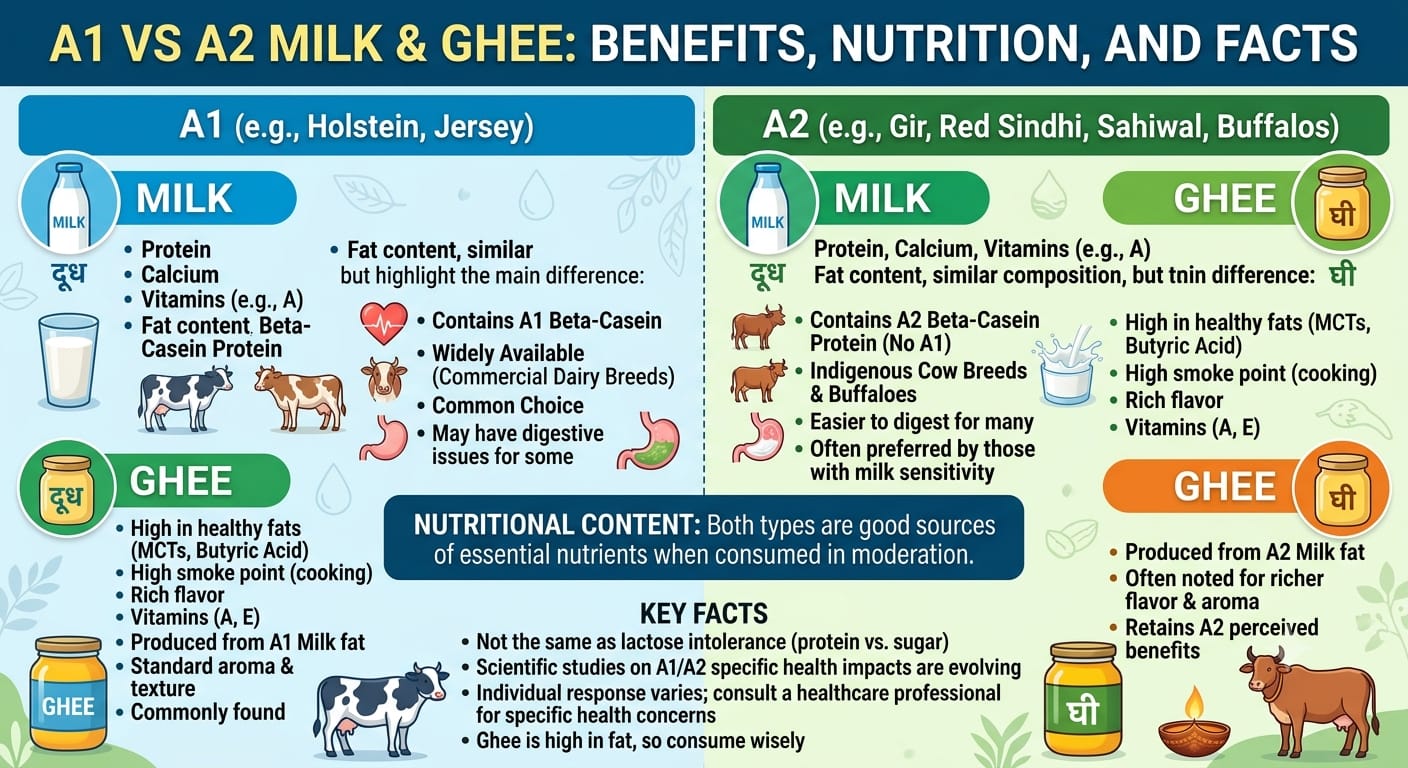
A1 milk is milk that contains the A1 type of beta-casein protein, which is one of the main proteins naturally present in cow’s milk. Scientists believe that the A1 protein developed thousands of years ago due to a natural genetic mutation in certain breeds of cattle. Today, many dairy cows produce milk containing either only A1 protein or a combination of both A1 and A2 proteins. Common breeds that usually produce A1 milk include Holstein Friesian, Jersey, Ayrshire, and British Shorthorn. These breeds are widely used in commercial dairy farming because they produce large quantities of milk.
What is A2 Milk?
A2 milk contains only the A2 type of beta-casein protein. Researchers believe that A2 is the original form of beta-casein found in ancient cattle before the natural mutation created the A1 protein. Many indigenous Indian cow breeds naturally produce A2 milk. These include Gir, Sahiwal, Tharparkar, Red Sindhi, Rathi, and Kankrej. Buffalo milk also mainly contains the A2 type of beta-casein protein, making it another natural source of A2 dairy products.
What is the Difference Between A1 and A2 Milk?
The main difference between A1 and A2 milk lies in a single amino acid present in the beta-casein protein. In A1 milk, the amino acid at one specific position is Histidine, while in A2 milk it is Proline. Although this appears to be a very small difference, it changes the way the protein breaks down during digestion. Some researchers suggest that digestion of A1 protein may produce a peptide called Beta-Casomorphin-7 (BCM-7). Scientists are still studying whether BCM-7 has any meaningful effects on human health. At present, there is not enough scientific evidence to conclude that BCM-7 causes health problems in healthy individuals, and further research is still needed.
Does the Taste Differ?
Most people cannot notice any significant difference in the taste of A1 and A2 milk. Both types generally have a creamy texture, mild flavor, similar color, and pleasant aroma. The taste of milk depends much more on factors such as the fat content, freshness, the cow’s diet, and the method of processing than on whether it contains A1 or A2 beta-casein protein.
Nutritional Value of A1 and A2 Milk
Both A1 and A2 milk provide almost identical nutrition. They are excellent sources of high-quality protein, calcium, phosphorus, potassium, magnesium, and zinc. They also supply several essential vitamins, including Vitamin A, Vitamin D when fortified, Vitamin B2 (Riboflavin), Vitamin B12, Vitamin B5, along with smaller amounts of Vitamin B1, Vitamin B6, and folate. The overall nutritional composition of both types of milk is almost the same, making both healthy options for most people.
Health Benefits of Milk
Both A1 and A2 milk provide numerous health benefits because they are nutrient-rich foods. Their high calcium and phosphorus content helps build strong bones and maintain bone density, reducing the risk of osteoporosis later in life. Milk also contains complete protein with all essential amino acids, which supports muscle growth, tissue repair, and recovery after physical activity. The calcium and phosphorus found in milk contribute to healthy teeth and help reduce the risk of dental problems. In addition, milk provides important vitamins and minerals that support the immune system. Vitamin B12 plays an essential role in maintaining healthy nerves, supporting brain function, and producing healthy red blood cells.
Is A2 Milk Easier to Digest?
Some people report experiencing less bloating, stomach discomfort, or digestive problems after drinking A2 milk instead of regular milk. A few small scientific studies have also suggested that some individuals may digest A2 milk more comfortably. However, researchers emphasize that larger and more detailed studies are still needed before firm conclusions can be made. It is also important to remember that people who are lactose intolerant may continue to experience digestive symptoms with both A1 and A2 milk because lactose intolerance is caused by difficulty digesting milk sugar (lactose), not by the beta-casein protein.
What is Ghee?
Ghee is a traditional form of clarified butter that has been used in Indian cooking and Ayurveda for centuries. It is valued for its rich aroma, golden color, pleasant taste, and long shelf life. Ghee is commonly used for cooking because it remains stable at high temperatures and enhances the flavor of many dishes.
How is Ghee Made?
The traditional method of preparing ghee begins by collecting fresh milk, which is then converted into curd. The curd is churned to separate butter from the buttermilk. The butter is heated slowly over low heat until the water evaporates and the milk solids separate from the fat. The remaining golden liquid is pure ghee, which is then filtered and stored. This traditional preparation method is widely known for producing high-quality, flavorful ghee.
What is A1 Ghee?
A1 ghee is prepared from butter obtained from A1 milk. The manufacturing process remains exactly the same as traditional ghee preparation. The only difference is that the milk used to produce the butter contains the A1 type of beta-casein protein.
What is A2 Ghee?
A2 ghee is made from butter obtained from A2 milk. Many traditional Bilona ghee products are prepared using milk from indigenous Indian A2 cow breeds. Apart from the source of milk, the preparation process is identical to that of A1 ghee.
Vitamins Present in Ghee
Both A1 and A2 ghee contain important fat-soluble vitamins such as Vitamin A, Vitamin D, Vitamin E, and Vitamin K. The exact amount of these vitamins depends on several factors, including the cow’s diet, whether the animals are grass-fed, seasonal changes, and the processing method used during preparation.
Health Benefits of Ghee
Ghee provides healthy fats that serve as a concentrated source of energy. It also helps the body absorb fat-soluble vitamins such as Vitamins A, D, E, and K, which require dietary fat for proper absorption. Because ghee has a high smoke point, it is suitable for frying, roasting, sautéing, and other high-temperature cooking methods. In addition, even a small quantity of ghee enhances the taste and aroma of many foods.
Is A2 Ghee Better Than A1 Ghee?
Many companies promote A2 ghee as being healthier than A1 ghee. However, current scientific evidence does not prove that A2 ghee offers significantly greater health benefits for everyone. The nutritional differences between the two are very small. In many cases, factors such as the quality of the milk, the cow’s diet, hygienic production methods, and traditional preparation techniques may have a greater impact on the final quality of ghee than whether it is labeled A1 or A2.
Common Myths About A1 and A2 Milk
Several myths surround A1 and A2 dairy products. One common myth is that A2 milk can cure diseases such as diabetes, cancer, or heart disease. There is currently no scientific evidence supporting these claims. Another misconception is that A1 milk is harmful to everyone, but millions of healthy people consume A1 milk without any problems. Some people also believe that A2 milk contains more vitamins and minerals than A1 milk, which is incorrect because both have nearly identical nutritional content. Another false belief is that A2 ghee contains little or no fat, whereas both A1 and A2 ghee are composed mainly of fat.
Who Should Choose A2 Milk?
Some people may prefer A2 milk if they experience digestive discomfort after drinking regular milk, prefer milk from indigenous Indian cow breeds, or simply enjoy traditional dairy products. However, choosing A2 milk is a personal preference rather than a necessity for everyone. Individuals with digestive issues should consult a healthcare professional or a registered dietitian before making major dietary changes.
Who Should Limit Ghee Intake?
Although ghee can be part of a healthy diet, people with obesity, high cholesterol, heart disease, or fatty liver disease should consume it in moderation. Like all fats, excessive intake of ghee can contribute to excess calorie consumption, so moderation remains the key to maintaining good health.
Storage Tips
Milk should always be stored in the refrigerator, used before its expiry date, and should not be repeatedly heated, as this may reduce its quality. Ghee should be stored in a clean, dry, airtight container away from moisture. Always use a dry spoon when taking out ghee, and close the lid tightly after every use to preserve its freshness and quality.
Which One Should You Buy?
The choice between A1 and A2 milk depends largely on individual needs and preferences. If you drink regular milk without any digestive discomfort, A1 milk is generally a perfectly suitable and nutritious choice. If you experience stomach discomfort after consuming regular milk and your doctor or registered dietitian recommends trying A2 milk, it may be worth considering. Regardless of whether you choose A1 or A2 milk, selecting fresh, hygienically processed milk from trusted sources is more important. Similarly, when purchasing ghee, focus on its purity, quality, proper storage, and the reputation of the manufacturer rather than only on whether it is labeled A1 or A2.
Conclusion : A1 and A2 milk are both highly nutritious dairy products that provide excellent-quality protein, calcium, vitamins, and essential minerals. The primary difference between them lies in the type of beta-casein protein they contain. Likewise, A1 and A2 ghee are produced using the same traditional process, with the only difference being the type of milk used to prepare them. Current scientific research has not confirmed that A2 milk or A2 ghee is universally healthier than A1 products. While some individuals may find A2 milk easier to digest, this benefit does not apply to everyone. Maintaining a balanced diet, following a healthy lifestyle, and choosing fresh, high-quality dairy products are far more important than focusing only on the A1 or A2 label. For most healthy individuals, both A1 and A2 milk can be included as part of a balanced and nutritious daily diet. Those with digestive issues, allergies, or specific medical conditions should seek advice from a qualified healthcare professional or a registered dietitian before making significant changes to their diet.