Environment Desk
Sandeep Dhand
Journalist And Research Analysist
Nutritionist And Health Educator
Introduction
Every year on 5 June, people around the world celebrate World Environment Day. It is one of the most important environmental events observed globally. The day reminds us that our planet is our home and that we all share the responsibility of protecting it. Clean air, pure water, healthy soil, forests, rivers, and wildlife are essential for human survival. However, pollution, climate change, deforestation, and waste are putting our environment at risk.
World Environment Day encourages individuals, communities, organizations, and governments to take action for nature. It is not only a celebration but also a call to protect the Earth for future generations.
What is World Environment Day?
World Environment Day is celebrated every year on 5 June. It was established by the United Nations in 1972 during the United Nations Conference on the Human Environment held in Stockholm, Sweden.
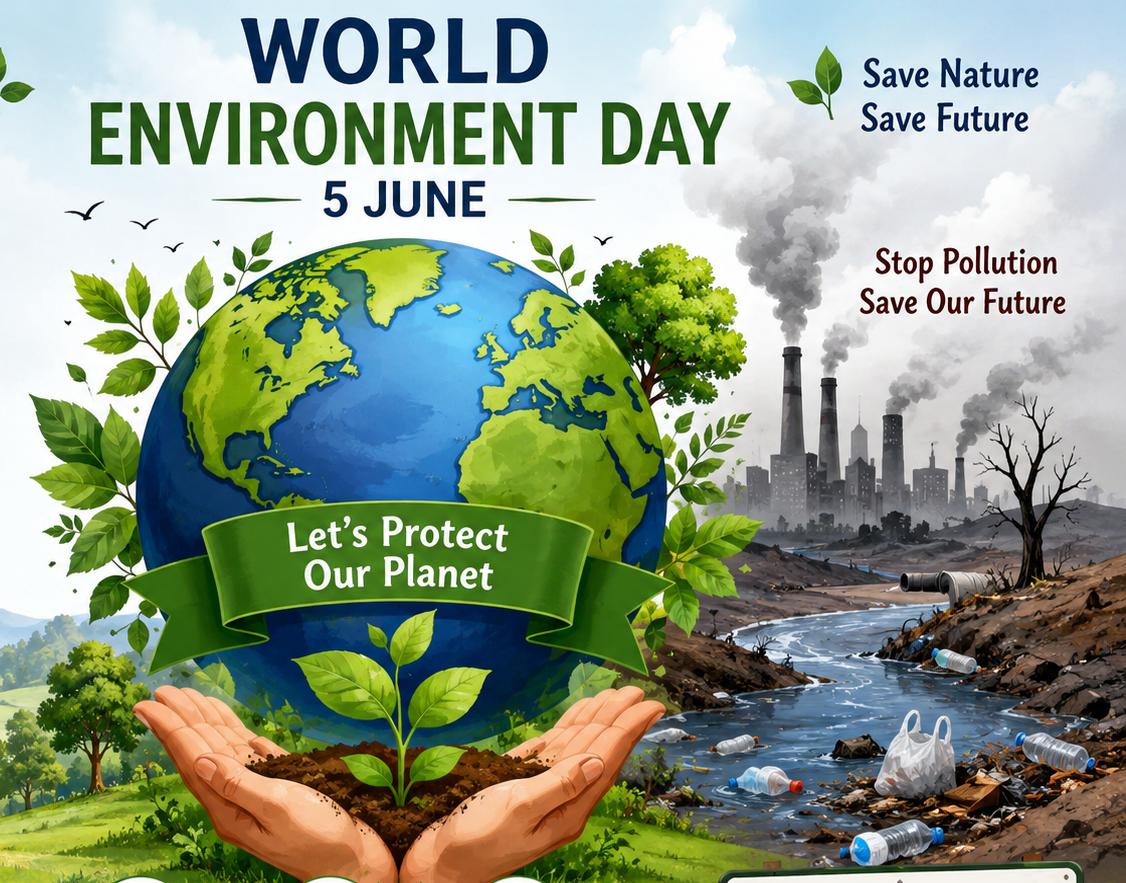
The first World Environment Day was celebrated in 1973. Since then, it has become a global platform for raising awareness about environmental issues. Millions of people participate in activities such as tree plantation drives, clean-up campaigns, educational programs, and environmental discussions.
The main purpose of this day is to encourage people to understand environmental problems and become part of the solution.
Why is the Environment Important?
The environment provides everything necessary for life. It includes air, water, land, plants, animals, and natural resources.
We depend on the environment for:
Food and drinking water
Fresh air to breathe
Shelter and resources
Medicines from plants
Climate regulation
Livelihoods and employment
Without a healthy environment, human life cannot survive. Therefore, protecting nature is not a choice but a necessity.
Major Environmental Problems Facing the World
- Climate Change
Climate change is one of the biggest challenges facing humanity today. The burning of fossil fuels such as coal, oil, and natural gas releases greenhouse gases into the atmosphere.
These gases trap heat and increase the Earth’s temperature, causing:
Rising sea levels
Heat waves
Droughts
Floods
Strong storms
Changes in weather patterns
Climate change affects agriculture, human health, and biodiversity across the world.
- Air Pollution
Air pollution is caused by vehicle emissions, factories, burning of waste, and industrial activities.
Polluted air can lead to:
Asthma
Lung diseases
Heart problems
Breathing difficulties
Millions of people die every year due to diseases linked to air pollution.
- Water Pollution
Rivers, lakes, and oceans are being polluted by plastic waste, industrial chemicals, sewage, and agricultural runoff.
Water pollution affects:
Human health
Marine life
Fish populations
Drinking water sources
Clean water is essential for life, and protecting water resources is a global priority.
- Deforestation
Forests play an important role in maintaining ecological balance. They absorb carbon dioxide and release oxygen.
However, forests are being cut down for:
Agriculture
Urban development
Logging
Infrastructure projects
Deforestation leads to habitat loss, soil erosion, and climate change.
- Plastic Pollution
Plastic waste has become a major environmental problem.
Single-use plastic items such as:
Plastic bags
Bottles
Straws
Food packaging
often end up in rivers and oceans.
Animals may eat plastic or become trapped in it, causing injury or death. Plastic pollution also affects human health through the food chain.
Importance of Biodiversity
Biodiversity refers to the variety of living organisms on Earth, including plants, animals, insects, and microorganisms.
Biodiversity is important because it:
Maintains ecosystem balance
Supports food production
Provides medicines
Helps pollination
Improves soil fertility
Unfortunately, many species are becoming endangered due to habitat destruction, pollution, and climate change.
Protecting biodiversity helps ensure a healthy and sustainable future.
Theme of World Environment Day
Each year, World Environment Day is celebrated with a specific theme focusing on a major environmental issue.
The themes may address topics such as:
Plastic pollution
Ecosystem restoration
Biodiversity conservation
Climate action
Land restoration
Sustainable living
These themes help governments and citizens focus on urgent environmental challenges and find solutions together.
Role of Individuals in Protecting the Environment
Many people believe environmental protection is only the responsibility of governments. However, individual actions can make a significant difference.
Reduce Waste
People can reduce waste by:
Using reusable bags
Avoiding single-use plastics
Recycling materials
Reusing items whenever possible
Save Water
Simple habits can save water:
Turning off taps when not in use
Repairing leaks
Using water efficiently
Save Energy
Energy conservation helps reduce greenhouse gas emissions.
Ways to save energy include:
Switching off unused lights
Using energy-efficient appliances
Choosing renewable energy sources
Plant Trees
Trees improve air quality, absorb carbon dioxide, and provide habitat for wildlife.
Planting and protecting trees is one of the simplest ways to help the environment.
Use Public Transport
Walking, cycling, and public transportation reduce fuel consumption and air pollution.
These choices also improve personal health.
Role of Schools and Educational Institutions
Schools play a major role in creating environmental awareness among young people.
Educational institutions can:
Organize tree plantation drives
Conduct environmental workshops
Promote recycling programs
Celebrate World Environment Day
Encourage eco-friendly practices
Students who learn environmental values today become responsible citizens tomorrow.
Role of Governments
Governments have a crucial role in environmental protection.
They can:
Create environmental laws
Control pollution
Protect forests and wildlife
Promote renewable energy
Encourage sustainable development
Strong policies and effective implementation are essential for long-term environmental conservation.
Role of Businesses and Industries
Industries contribute to economic growth but can also impact the environment.
Responsible businesses should:
Reduce emissions
Manage waste properly
Use sustainable resources
Invest in clean technologies
Promote green practices
Many companies are now adopting environmentally friendly methods to reduce their environmental footprint.
Environmental Protection and Sustainable Development
Sustainable development means meeting present needs without compromising the ability of future generations to meet their own needs.
It focuses on balancing:
Economic growth
Social development
Environmental protection
Sustainable development encourages responsible use of resources and long-term environmental care.
Environmental Success Stories
There are many examples of positive environmental action around the world.
Reforestation Projects
Many countries have launched tree-planting programs to restore forests and improve biodiversity.
Renewable Energy Growth
Solar and wind energy are becoming more common, reducing dependence on fossil fuels.
Plastic Reduction Campaigns
Several nations have restricted or banned single-use plastics to reduce pollution.
Wildlife Conservation
Conservation programs have helped protect endangered species and restore natural habitats.
These success stories show that positive change is possible when people work together.
What Can Children Do for the Environment?
Children can contribute in many simple ways:
Plant trees
Avoid littering
Save electricity
Save water
Use reusable bottles
Participate in clean-up drives
Spread awareness among friends and family
Small actions can create big changes over time.
Environmental Protection in Daily Life
Environmental care should not be limited to one day each year. It should become part of our daily routine.
Some eco-friendly habits include:
Carrying cloth bags
Reducing food waste
Using less plastic
Conserving water
Recycling household waste
Supporting environmentally friendly products
When millions of people adopt these habits, the impact becomes significant.
Challenges Ahead
Although awareness about environmental issues is increasing, many challenges remain.
These include:
Rapid urbanization
Population growth
Increasing pollution
Resource depletion
Climate-related disasters
Addressing these challenges requires cooperation between governments, businesses, communities, and individuals.
Conclusion
World Environment Day, celebrated on 5 June, reminds us that the Earth is our shared home. The environment provides everything we need for survival, yet human activities continue to threaten its health. Climate change, pollution, deforestation, and biodiversity loss are serious concerns that require immediate action.
Protecting the environment is not the responsibility of one person or one country alone. Every individual has a role to play. By planting trees, reducing waste, conserving resources, and adopting sustainable lifestyles, we can contribute to a healthier planet.
World Environment Day inspires people across the globe to take action and work together for a cleaner, greener, and more sustainable future. If we care for nature today, future generations will inherit a world that is healthy, beautiful, and full of life.