Health Desk
Sandeep Dhand Nutritionist And Health Educator
Summer season brings extreme heat, and because of this many people start feeling tired, weak, or dehydrated. In hot weather, our body loses more water through sweat, which makes proper hydration very important. One common question people often ask is whether everyone should drink 3 to 4 liters of water daily or if water intake should depend on body weight.
The truth is that there is no single rule that fits everyone. Some people may need more water, while others may need less depending on their body weight, physical activity, and health condition. Drinking enough water helps the body stay active and cool, but forcing too much water is also not always healthy.
Water plays an important role in the human body. It helps control body temperature, improves digestion, removes waste, supports healthy skin, and keeps muscles and joints working properly. During summer, the body naturally sweats more to stay cool, and this increases water loss.
Many people in Punjab and other hot regions complain of headaches, dizziness, weakness, and dryness during peak summer days. In many cases, dehydration is one of the main reasons behind these problems. Dark yellow urine, dry mouth, and extreme thirst are common warning signs that the body needs more fluids.
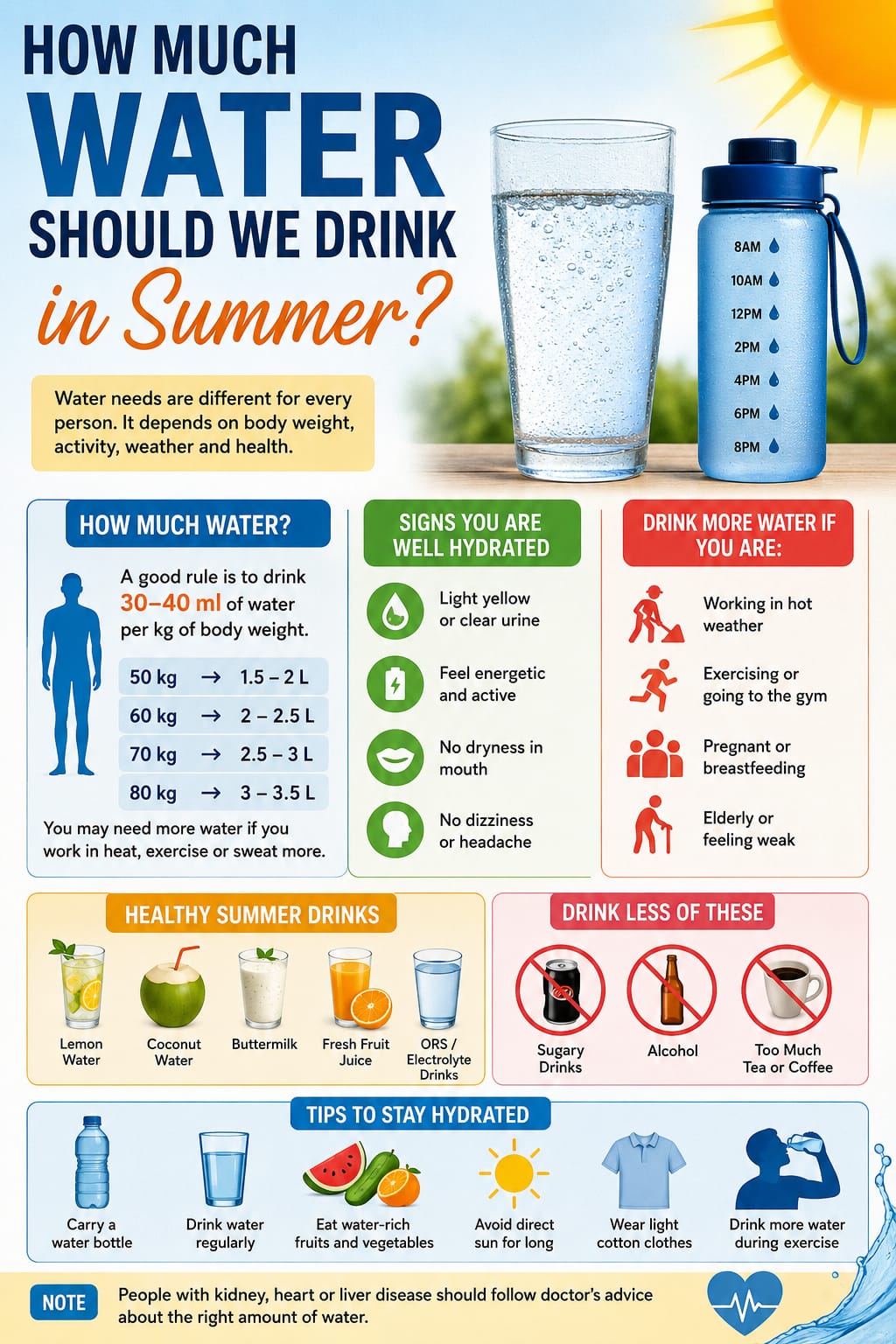
Instead of blindly following the “4-liter rule,” health experts often suggest calculating water needs according to body weight. A simple guideline is:
This means a person should drink around 30 to 40 milliliters of water for every kilogram of body weight. For example, a 60 kg person may need around 2 to 2.5 liters daily, while someone who works outside in the heat may require even more fluids.
Simple daily habits can help prevent dehydration. Carrying a water bottle, eating seasonal fruits like watermelon and cucumber, and drinking fluids regularly throughout the day can make a big difference during summer.